


Trio Mobil Global Technology Innovation Leader in AI-Based Industrial Safety
Read the Frost & Sullivan Analysis

What Is a SIF Precursor? AI-Based Near-Miss Detection in Forklift Safety
 Jul 20, 2026
 4 min
4 min 555
555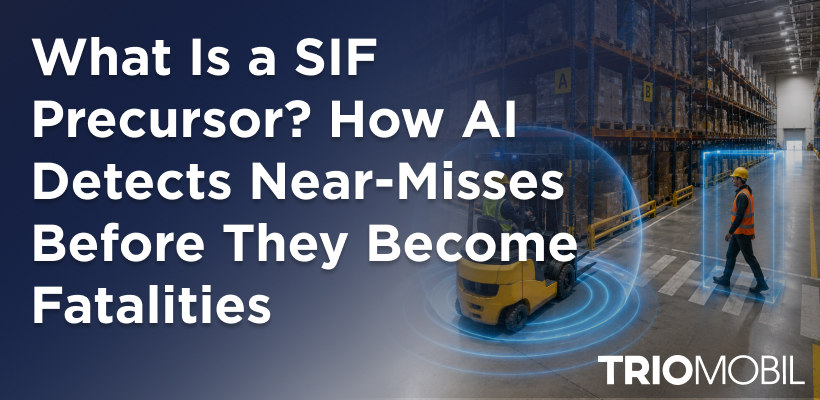
Industrial forklift safety is not defined by isolated incidents, but by the frequency and structure of interactions between forklifts, pedestrians, and the facility environment. In high-density operations, risk is continuously generated through everyday movements such as forklifts crossing paths with pedestrians, entering shared zones, or operating with limited visibility.
Most of these interactions do not result in accidents. However, they are not random or insignificant. They are repeatable, measurable events that reflect how risk forms within the system.
A pedestrian stepping into a forklift’s path at a blind corner, or a forklift operating in close proximity to foot traffic, are not just unsafe moments. They are early signals of conditions that can lead to serious injury or fatality events.
This blog explains what SIF precursors are in the context of forklift operations and why they are critical for managing high-severity risk. It also explores how AI-driven safety systems detect, classify, and analyze near-miss interactions in real time, turning everyday operational data into actionable safety insight.
SIF Precursors Represent the Leading Edge of Serious Injury Risk
A SIF precursor is an observable condition, behavior, or event that indicates an increased likelihood of a serious injury or fatality if left unaddressed. These precursors are not accidents themselves but are leading indicators of high-consequence risk.
SIF precursors typically include:
- Near-miss interactions between forklifts and pedestrians
- Unsafe proximity between moving equipment
- Entry into high-risk zones without adequate control
- Loss of visibility or awareness in critical areas
- Deviations from safe operating conditions under load or speed
Unlike minor incidents, SIF precursors are directly linked to scenarios with the potential for severe outcomes. They provide measurable signals that risk is accumulating within a system.
In forklift operations, a near-miss between a pedestrian and a reversing forklift is not an isolated event. It is a data point that reflects gaps in visibility, awareness, or control. When these events occur repeatedly, they form patterns that precede serious incidents.
Traditional Safety Systems Provide Limited Visibility Into Real-Time Risk Formation
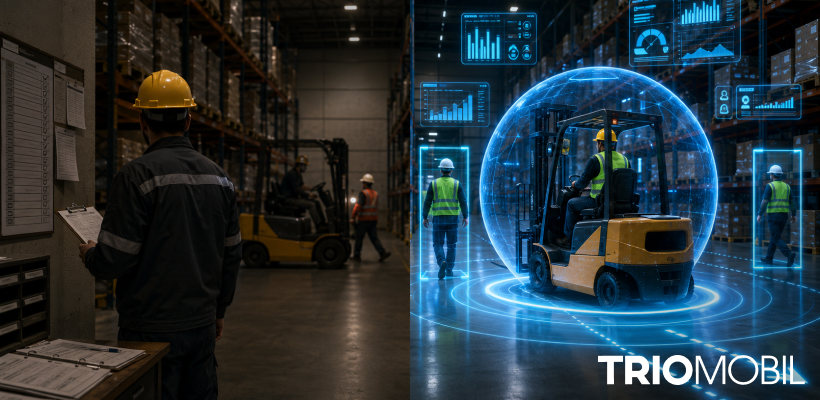
Conventional safety approaches are essential for compliance and baseline risk control, but they are inherently limited in detecting how risk develops in real time.
Most traditional systems rely on lagging indicators such as incident reports, audits, and recorded injuries. These methods provide historical insight but do not capture the conditions that lead to high-severity events.
Several constraints define this limitation:
- Delayed feedback loops prevent timely intervention
- Underreporting of near-misses reduces visibility into precursor events
- Dependence on manual observation limits coverage in large facilities
- Static controls cannot adapt to changing operational conditions
- Low data granularity restricts pattern recognition and predictive analysis
As a result, organizations may maintain compliance while lacking visibility into the accumulation of SIF risk. The gap is not the absence of safety measures but the inability to continuously monitor and interpret dynamic interactions.
AI and IoT Systems Enable Continuous Detection and Analysis of Near-Miss Events
Modern safety technologies address these limitations by creating a continuous layer of situational awareness across industrial environments. AI, IoT, and real-time location systems transform physical interactions into structured, actionable data.
These systems operate through several key mechanisms:
- Continuous monitoring of movement and proximity: Sensors and positioning technologies track forklifts, pedestrians, and equipment in real time.
- AI-based event detection: Algorithms identify unsafe conditions such as critical proximity or zone violations based on predefined risk thresholds.
- Context-aware decision logic: Systems differentiate between safe and unsafe scenarios by incorporating environmental rules, zone definitions, and operational context.
- Real-time alerting and intervention: Audiovisual warnings and automated controls support immediate response to detected risks.
- Data capture for pattern analysis: All interactions are recorded, enabling long-term analysis of trends, hotspots, and recurring exposure scenarios.
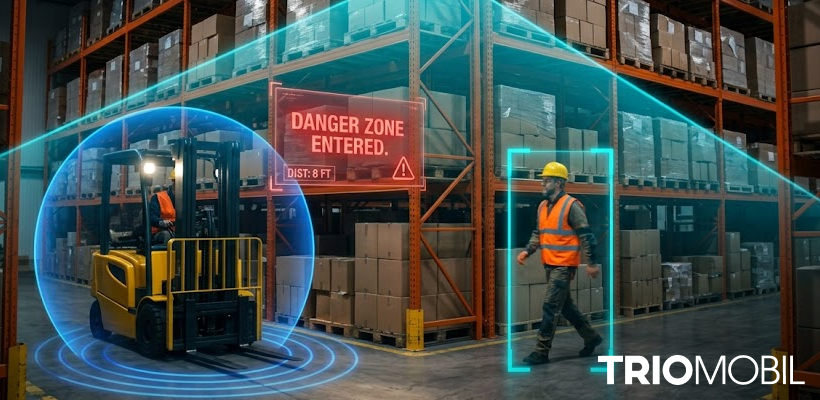
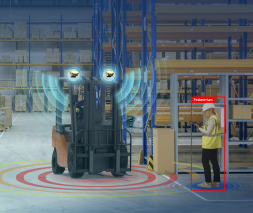
AI-based video analytics, for example, can detect pedestrians in blind spots and trigger alerts only when they enter defined danger zones, reducing unnecessary alarms while maintaining effective risk sensitivity .
This approach converts near-misses into measurable data, allowing SIF precursors to be managed systematically rather than anecdotally.
Real-Time SIF Precursor Detection Improves Risk Awareness and Operational Consistency
The ability to detect SIF precursors continuously provides both safety and operational advantages. It enables organizations to move from reactive response to a more proactive and structured approach to risk management.
Risk Visibility
Safety teams gain clearer insight into where and how high-risk interactions occur within the facility. Continuous detection makes previously unobservable patterns visible.
Risk Prioritization
Collected data supports the differentiation between low-impact events and interactions with higher severity potential, enabling more focused interventions.
Consistent Safety Enforcement
Automated systems apply predefined safety rules uniformly across all shifts and operational areas, reducing variability caused by human factors.
Operator Awareness Support
Real-time audiovisual alerts assist forklift operators in maintaining awareness, particularly in environments with limited visibility and high workload.
Continuous Safety Improvement
Event-based data enables ongoing refinement of layouts, workflows, and safety rules based on actual operational conditions.
In large-scale operations, these capabilities support both safety performance and operational efficiency by reducing variability and improving predictability.
Trio Mobil Solutions Enable Structured Detection of SIF Precursors
Trio Mobil solutions support SIF risk management by enabling continuous detection, recording, and response to high-risk interactions within forklift operations. By combining AI-based vision, real-time proximity detection, and zone-based controls, they create a layered safety framework that makes early risk signals observable and measurable.
AI-Based Visibility in Blind Spots
AI-powered video analytics systems monitor defined operational areas and detect pedestrian presence in real time, particularly in blind spots and visually obstructed zones.
Alerts are triggered only when pedestrians enter predefined danger zones. This context-based approach ensures that warnings are relevant to actual risk conditions while reducing unnecessary alarms. In complex environments, this method supports improved visibility where direct line of sight is limited .
Real-Time Proximity Awareness
UWB-based proximity detection enables precise measurement of distance between forklifts, pedestrians, and other equipment. This allows unsafe proximity events - key SIF precursors - to be identified consistently.
When configured thresholds are reached, the system provides audiovisual alerts and can support controlled speed reduction. This creates a repeatable and standardized method for managing near-miss conditions.
Zone-Based Risk Control
Zone-based safety systems define high-risk areas such as intersections, loading zones, and confined aisles. These zones are configured with specific safety rules based on operational risk levels.
As forklifts enter these areas, predefined responses such as speed limitation or alert activation are applied. This ensures that environmental risks are addressed consistently, independent of operator variability.
Integrated Safety Deployment at Scale
In high-density operations, risk is driven by the frequency and complexity of interactions. Combining AI detection, proximity sensing, and zone control enables consistent monitoring across large facilities.
This approach has been applied in environments with high forklift and pedestrian activity, supporting the identification of unsafe interactions and reduction of near-miss events .
AI Risk Radar
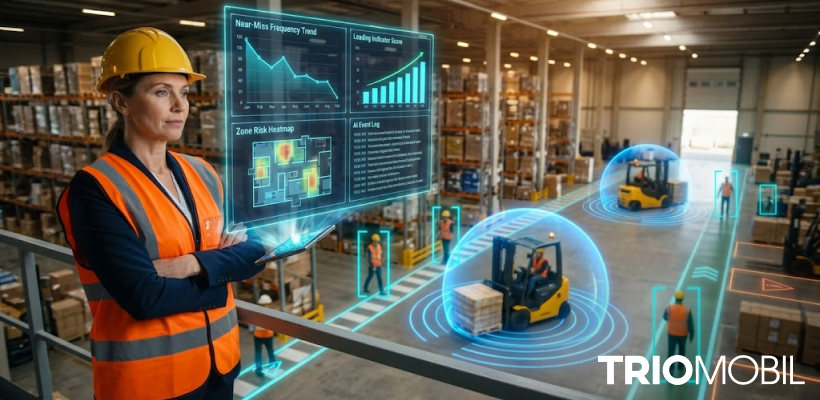
AI Risk Radar provides a structured view of safety events by collecting and organizing data generated from AI cameras, proximity detection systems, and zone-based controls.
The system focuses on identifying patterns such as recurring near-miss events, high-exposure zones, and interaction frequency. Event-based records are stored and analyzed to support visibility into how risk is distributed across the operation.
This enables safety teams to:
- Identify areas with higher interaction density
- Monitor trends in near-miss occurrences
- Evaluate the effectiveness of safety rules and configurations
AI Risk Radar supports data-driven decision-making by converting operational events into measurable safety insights.
Data-Driven Safety Monitoring
All detected interactions are recorded as event-based data, creating a continuous dataset of SIF precursors across the facility.
This information provides visibility into recurring patterns, operational hotspots, and exposure trends. These insights support ongoing refinement of safety measures while remaining aligned with existing procedures and controls.
Managing SIF Precursors Requires a Shift Toward Continuous, Data-Driven Safety Systems
SIF precursors represent the most actionable layer of safety intelligence in industrial operations. They provide early, measurable signals of risk that can be addressed before incidents occur.
Effective management of these signals depends on the ability to continuously monitor interactions, interpret risk conditions, and respond in real time. This requires moving beyond static forklift safety controls toward adaptive, data-driven systems.
For decision makers, several strategic principles define this shift:
- Leading indicators are more effective than lagging metrics in managing high-severity risk
- Operational complexity requires dynamic and context-aware safety systems
- Real-time data improves both safety outcomes and operational consistency
- Scalable solutions must balance sensitivity with practicality
- Integration of AI and IoT technologies is becoming foundational for modern safety strategies
SIF precursors are embedded within normal operations. The ability to detect and act on them defines the maturity of an organization’s safety approach and its readiness to manage serious injury and fatality risks at scale.
Disclaimer: Trio Mobil solutions are operator-assist aids. They do not replace safe working practices or prevent all incidents. Performance depends on operating conditions and configuration; see product documentation.

Product Catalogue 2026
Download our catalog and gain access to a wealth of information on how to enhance industrial safety and efficiency. Our latest catalog features a diverse range of products and services that can help you achieve your goals.
Our Latest Blogs


Learn more about Trio Mobil's Solutions
Fill out the form and we'll contact you!