


Trio Mobil Global Technology Innovation Leader in AI-Based Industrial Safety
Read the Frost & Sullivan Analysis

What Is a Forklift Warning System and How Does It Protect Pedestrians and Equipment?
 Aug 24, 2026
 3 min
3 min 501
501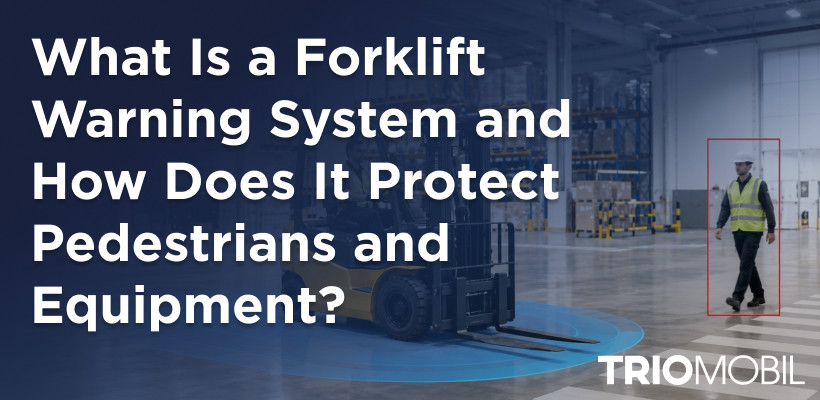
Forklift safety is no longer defined by how quickly hazards are identified after an incident. It increasingly depends on how effectively workers and operators are alerted before risks escalate.
In busy warehouses and manufacturing facilities, forklifts, pedestrians, and other industrial vehicles often operate within the same environment. Blind corners, intersecting routes, high ambient noise, and limited visibility can make it difficult for everyone to recognize potential hazards in time.
A forklift warning system is designed to improve awareness of these situations. Rather than relying on a single alarm or warning light, modern systems can combine multiple technologies to provide more relevant alerts based on what is happening around the vehicle.
In this guide, we'll explain what forklift warning systems are, how they work, the different technologies available, where they are commonly used, and how connected safety platforms support a more proactive approach to industrial safety.
What Is a Forklift Warning System?
A forklift warning system is a combination of technologies designed to improve awareness of forklift activity and potential hazards within industrial environments. Its purpose is to provide timely alerts to operators, pedestrians, or nearby vehicles when predefined conditions or risks are detected.
Unlike traditional warning devices that operate continuously regardless of the situation, many modern warning systems can deliver alerts based on proximity, vehicle movement, pedestrian presence, or specific operational zones. The goal is not simply to generate more warnings, but to provide warnings that are relevant to the surrounding environment.
Depending on the deployment, a forklift warning system may include:
- Audible warnings: Horns, reverse alarms, voice announcements, or area speakers that notify nearby personnel of forklift movement.
- Visual warnings: Blue safety lights, red danger zone lights, LED beacons, or floor projection systems that improve visibility around operating forklifts.
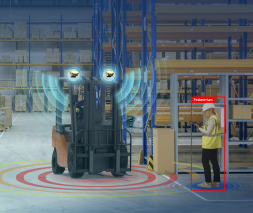
- AI-powered camera systems: Vision-based technologies that can identify pedestrians or other objects within the monitored field of view and provide configurable operator alerts.
- Proximity warning technologies: UWB or RTLS-based systems that help identify nearby pedestrians, forklifts, or restricted areas, including situations where direct line of sight may be limited.
- Connected monitoring platforms: Software that records warning events and provides operational insights to support continuous safety improvement.
Because every facility has different layouts, traffic patterns, and operational requirements, warning systems are typically deployed as one layer within a broader workplace safety strategy rather than as standalone solutions.
Why Are Forklift Warning Systems Important?
Industrial facilities are dynamic environments where conditions can change in seconds. Forklifts, pedestrians, AGVs, trucks, and other mobile equipment often share the same operating space, creating situations where awareness becomes just as important as visibility.
While operator training, traffic management plans, and physical separation remain fundamental safety measures, warning systems provide an additional layer of awareness when these environments become more complex.
Common operational challenges include:
- Blind intersections: Operators and pedestrians may approach the same crossing from different directions without seeing one another.
- Limited visibility: Tall loads, warehouse racks, parked trailers, or facility layouts can temporarily obstruct the operator's field of view.
- High pedestrian activity: Production areas, warehouse aisles, and loading zones often involve frequent interactions between forklifts and workers.
- Noisy environments: Manufacturing equipment can make traditional audible alarms more difficult to hear.
- Busy loading docks: Multiple vehicles operating simultaneously increase the need for timely warnings.
- Changing traffic conditions: Temporary work areas, shifting inventory, and seasonal demand can alter traffic patterns throughout the day.
Modern warning systems help improve awareness during these situations by providing alerts that support faster recognition of potential hazards. However, they should always complement safe operating procedures, operator training, and established traffic management practices rather than replace them.
Common Types of Forklift Warning Systems
Forklift warning systems have evolved significantly over the past decade. While traditional audible and visual devices remain widely used, many facilities now combine multiple technologies to improve awareness across different operating conditions.
Each type of warning system addresses a different challenge. Selecting the right combination depends on factors such as facility layout, traffic density, pedestrian activity, and operational requirements.
Audible Warning Systems
Audible alarms remain one of the most widely recognized forklift warning methods. They use sound to notify nearby workers whenever a forklift is moving or performing a specific action.
Common examples include:
- Reverse alarms: Emit a warning sound when the forklift travels in reverse.
- Horn systems: Allow operators to manually warn nearby personnel.
- Voice warning systems: Deliver spoken safety messages in designated areas.
- Area notification speakers: Broadcast warnings in high-risk operating zones.
Audible warnings can be effective in many environments. However, in facilities with high ambient noise, workers may become less aware of continuous alarms over time, reducing their effectiveness.
Visual Warning Systems
Visual warning systems improve awareness by projecting light or displaying highly visible signals around a moving forklift. These technologies are commonly used alongside audible warnings rather than replacing them.
Examples include:
- Blue safety lights that project a spot ahead of or behind the forklift.
- Red danger zone lights that outline an exclusion area around the vehicle.
- LED warning beacons mounted on the forklift.
- Ground projection systems that display warning symbols on the floor.
- Flashing visual indicators that activate during vehicle movement.
Visual alerts can be particularly useful in facilities where background noise makes audible alarms more difficult to notice.
AI Camera-Based Warning Systems
AI-powered vision systems add another layer of awareness by analyzing the forklift's surroundings in real time. Rather than issuing the same warning continuously, they can generate alerts when specific conditions are detected within the monitored field of view.
Depending on the deployment, AI camera systems may support:
- Pedestrian detection near the forklift.
- Object recognition around operating vehicles.
- Real-time operator alerts using visual or audio notifications.
- Configurable warning rules based on different operating scenarios.
- Event recording for later operational review.
As with any vision-based technology, performance depends on factors such as camera placement, lighting conditions, field of view, environmental conditions, and system configuration.
To learn how AI pedestrian detection works across different industrial environments, read our blog on Pedestrian Detection Camera Solutions for Different Industries.
UWB Proximity Warning Systems
Ultra-Wideband (UWB) technology uses precise positioning to identify when tagged pedestrians, forklifts, or other protected assets enter predefined warning zones. Because it is based on proximity rather than camera visibility alone, UWB can support awareness in situations where direct line of sight is limited.
Typical applications include:
- Forklift-to-pedestrian proximity alerts
- Forklift-to-forklift collision awareness
- Blind intersection detection
- Restricted area monitoring
- High-risk zone warnings
UWB technology complements AI vision by providing an additional layer of proximity awareness. Many modern deployments combine both technologies to support different types of operational risks.
If you'd like to explore how proximity detection technologies work in more detail, read our guide on What Is a Forklift Proximity Sensor and How Does It Prevent Accidents in the Workplace?
Connected Warning Platforms
Modern forklift warning systems are increasingly connected rather than standalone. Instead of treating each warning device independently, connected platforms combine data from multiple technologies to provide a more complete view of workplace risk.
These platforms may integrate:
- AI vision systems
- UWB proximity technologies
- RTLS infrastructure
- Vehicle telemetry
- Zone-based safety controls
- Operational analytics
The result is not simply more alerts. It is more relevant alerts delivered at the right time.
Connected platforms also allow safety teams to review warning events across multiple forklifts, helping identify recurring exposure areas, evaluate traffic patterns, and support continuous improvement initiatives across the operation.
To see how connected safety platforms monitor workplace risks beyond forklift movements, explore our guide What Does a Real-Time AI Safety Platform Actually Monitor? A 100-Risk-Category Breakdown.
Traditional Warning Systems vs. Intelligent Warning Systems
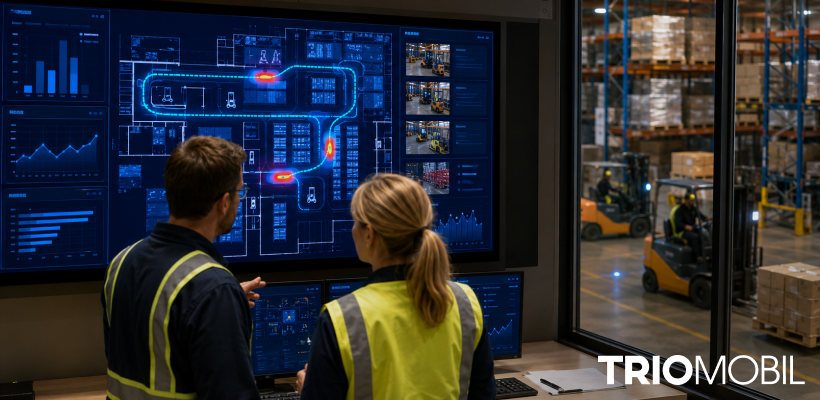
Not all forklift warning systems provide the same level of awareness. While traditional warning devices remain an important part of industrial safety, advances in AI, positioning technologies, and connected platforms have made it possible to deliver more context-aware warnings based on real operating conditions.
Rather than replacing conventional warning methods, intelligent systems build upon them by combining multiple technologies into a broader safety strategy.
| Traditional Warning Systems | Intelligent Warning Systems |
|---|---|
| Fixed audible or visual warnings | Context-aware alerts based on surrounding conditions |
| Same warning regardless of risk | Alerts triggered by specific events or proximity |
| Standalone warning devices | Connected safety platform with multiple technologies |
| Limited operational visibility | Event history and trend analysis |
| Manual review of incidents | Continuous monitoring of warning events |
| Individual devices managed separately | Integrated AI, UWB, RTLS, and fleet data |
Modern facilities often combine both approaches to improve awareness across different operating environments.
To understand why many organizations are moving beyond traditional safety approaches, read our blog on Why Traditional Safety Programs Struggle to Prevent Serious Injuries.
Where Are Forklift Warning Systems Commonly Used?
Forklift warning systems can support a wide range of industrial operations where pedestrians and moving equipment share the same workspace. The specific technologies used often depend on the facility layout, traffic density, and operational processes.
Warehouses
Warehouses typically involve continuous forklift movement, narrow aisles, and frequent pedestrian activity. Warning systems help improve awareness around intersections, picking areas, and shared travel routes.
Manufacturing Facilities
Production environments often combine forklifts with assembly operations, material handling equipment, and personnel working near vehicle traffic. Warning technologies can help increase awareness around production lines, staging areas, and material transfer points.
Distribution and Logistics Centers
High vehicle throughput, fast-paced operations, and changing traffic patterns make distribution centers well suited for layered warning systems. Audible, visual, AI, and proximity technologies can support safer movement throughout the facility.
Cold Storage Facilities
Cold storage environments present additional visibility challenges due to condensation, protective clothing, and enclosed layouts. Combining multiple warning technologies can help improve awareness where visibility may be reduced.
Loading Docks
Loading docks are among the busiest areas within many facilities. Forklifts, trailers, trucks, and pedestrians frequently operate in close proximity, making timely warnings particularly valuable during loading and unloading activities.
Outdoor Yards
Industrial yards often involve larger operating areas, mixed vehicle traffic, and changing environmental conditions. Connected warning systems can support awareness across loading zones, traffic routes, and designated pedestrian walkways.
How Trio Mobil Supports Intelligent Forklift Warning Systems
As industrial operations become more complex, warning systems benefit from combining multiple technologies rather than relying on a single device. Trio Mobil's Prevention-First approach integrates AI, UWB, RTLS, and fleet intelligence to help organizations improve operational awareness while supporting broader workplace safety initiatives.
Trio Safe AI
Trio Safe AI uses AI-powered cameras to monitor the forklift's surroundings in real time. Depending on system configuration, it can identify pedestrians within the monitored field of view and provide configurable visual and audio alerts to operators.
The system is designed to support earlier hazard recognition while recording warning events for later operational analysis.
UWB Proximity Safety
Trio Mobil's UWB technology provides precise proximity awareness between forklifts, pedestrians, and other equipped assets. Because UWB does not rely solely on camera visibility, it can support detection in blind intersections, around warehouse racks, and in other areas where direct line of sight may be limited.
Depending on deployment, the solution can support:
- Forklift-to-pedestrian proximity alerts
- Forklift-to-forklift awareness
- Blind intersection notifications
- High-risk area monitoring
- RTLS-enabled positioning
Zone Anchor
Zone Anchor extends warning capabilities into specific operating areas by creating configurable safety zones throughout the facility. When integrated with compatible vehicle controls, it can also support zone-based speed management in designated locations.
Typical applications include:
- Loading docks
- Blind intersections
- Pedestrian crossings
- Restricted access areas
- Production entrances
FleetBridge
Warning events become significantly more valuable when they can be analyzed over time. Trio Mobil’s FleetBridge fleet management platform centralizes operational data from connected forklifts, allowing safety teams to review warning trends, recurring exposure areas, vehicle utilization, and operational patterns across multiple facilities.
Instead of focusing only on isolated events, organizations can identify where risks occur most frequently and prioritize continuous improvement efforts.
To learn how fleet visibility helps address common operational challenges, read our guide on The Top Challenges in Forklift Fleet Management.
Benefits of Modern Forklift Warning Systems
Modern forklift warning systems do more than alert workers to a moving vehicle. When multiple technologies work together, they can provide greater operational awareness and help safety teams better understand where risk exposure occurs throughout the facility.
While the specific benefits depend on system configuration and operating conditions, connected warning systems can support both day-to-day safety operations and long-term continuous improvement.
- Improves situational awareness: Operators and pedestrians receive more timely warnings about nearby activity, helping them recognize potential hazards earlier.
- Supports safer pedestrian interactions: Technologies such as AI vision and UWB proximity detection can provide additional awareness when forklifts and pedestrians operate in shared areas.
- Reduces unnecessary warnings: Context-aware alerts focus on relevant events instead of issuing the same warning continuously, helping reduce unnecessary alarm exposure.
- Provides visibility into recurring risks: Warning events can be analyzed over time to identify frequently used intersections, high-traffic zones, or recurring exposure patterns.
- Supports data-driven safety decisions: Historical event data helps safety teams prioritize operational improvements based on measurable trends rather than isolated incidents.
- Integrates with broader safety strategies: Modern warning systems can work alongside fleet management, RTLS, AI video analytics, and zone-based safety controls to support a layered approach to workplace safety.
No single warning technology addresses every operational challenge. Combining multiple layers of awareness often provides greater flexibility across different facility layouts and workflows.
How to Choose the Right Forklift Warning System
Every industrial operation has unique traffic patterns, layouts, and safety priorities. The most suitable warning system is typically one that aligns with the facility's operational requirements while remaining flexible enough to adapt as those requirements evolve.
When evaluating a forklift warning system, consider questions such as:
- Does it support both operators and pedestrians? Effective warning strategies should improve awareness for everyone sharing the workspace.
- Can warnings adapt to different operating conditions? Systems that respond to proximity, pedestrian presence, or specific operating zones may provide more relevant alerts than fixed warning devices alone.
- Does it combine multiple technologies? AI vision, UWB, RTLS, and visual warning devices each address different operational challenges. A connected approach can provide broader coverage.
- Can warning events be reviewed later? Historical event data helps organizations identify recurring exposure areas and evaluate the effectiveness of safety initiatives.
- Does it integrate with existing operations? Compatibility with fleet management systems, vehicle controls, and facility infrastructure can simplify deployment and ongoing management.
- Can the solution scale with the business? As facilities expand, warning systems should be able to support additional vehicles, operating zones, and locations without requiring a complete redesign.
The objective is not simply to install more warning devices. It is to build a warning strategy that provides meaningful awareness while supporting continuous operational improvement.
If you're comparing different vendors and technologies, read our blog How to Evaluate the Best Forklift Safety System Providers: Decision-Maker Guide.
Building a More Connected Forklift Warning Strategy
As industrial environments become more dynamic, warning systems are evolving from standalone alarms into connected safety platforms that provide broader operational visibility. The focus is shifting from issuing more warnings to delivering the right warning at the right moment based on the surrounding environment.
By combining AI vision, UWB proximity technology, RTLS infrastructure, and operational analytics, organizations can create a more comprehensive approach to managing interactions between forklifts, pedestrians, and other mobile equipment.
Contact the Trio Mobil team to learn how Trio Safe AI, UWB Proximity Safety, Zone Anchor, and FleetBridge can support a connected forklift warning strategy tailored to your operational requirements.
Disclaimer: Trio Mobil solutions are operator-assist technologies designed to support workplace safety and operational awareness. They do not replace safe operating procedures, operator training, workplace supervision, or regulatory compliance requirements. System performance depends on deployment conditions, sensor placement, environmental factors, compatible vehicle integration, and overall system configuration.
Key Takeaways
This article explored how forklift warning systems have evolved from simple alarms into connected awareness technologies. The following points summarize the main concepts discussed:
- Forklift warning systems are designed to improve awareness of moving vehicles and potential hazards.
- Warning systems may use audible, visual, AI, UWB, or RTLS technologies depending on operational needs.
- Different warning technologies address different types of workplace risks.
- Connected safety platforms combine multiple technologies to provide more relevant, context-aware alerts.
- Historical warning data can help identify recurring exposure areas and support continuous improvement.
- Warning systems are most effective when used alongside operator training, traffic management, and established workplace safety procedures.
Frequently Asked Questions
A forklift warning system is a collection of technologies designed to improve awareness of forklift activity by providing alerts to operators, pedestrians, or nearby vehicles when predefined conditions or potential hazards are detected.
Common warning systems include audible alarms, visual warning lights, AI camera-based detection, UWB proximity warning systems, RTLS-enabled positioning technologies, and connected safety platforms that combine multiple solutions.
Forklift warning systems are designed to support operator awareness and help organizations manage workplace risk. They do not replace operator training, safe work practices, traffic management plans, or human judgment, and they should not be considered a guarantee against incidents.
AI camera systems monitor the forklift's surroundings within their field of view and can identify pedestrians or other objects using computer vision. UWB technology measures proximity between equipped forklifts and tagged pedestrians or assets, allowing it to support awareness even in some situations where direct line of sight is limited. Many organizations deploy both technologies together because they address different operational scenarios.
Yes. Many modern warning systems can integrate with connected fleet management and safety platforms, allowing organizations to review warning events, analyze operational trends, and support continuous improvement initiatives across multiple vehicles or facilities.

Product Catalogue 2026
Download our catalog and gain access to a wealth of information on how to enhance industrial safety and efficiency. Our latest catalog features a diverse range of products and services that can help you achieve your goals.
Our Latest Blogs


Learn more about Trio Mobil's Solutions
Fill out the form and we'll contact you!