

Trio Mobil Global Technology Innovation Leader in AI-Based Industrial Safety
Read the Frost & Sullivan Analysis

What Is ISO 27001 and Why Does It Matter for AI-Powered Industrial Safety?
 Nov 16, 2026
 5 min
 411

Industrial safety systems are becoming increasingly connected. AI-powered cameras detect pedestrians, proximity technologies identify hazardous interactions, and cloud-based platforms help safety teams analyze operational risks across multiple facilities.
These technologies generate valuable safety intelligence. They also introduce important questions about how information is accessed, transmitted, stored, and protected.
For manufacturers, warehouses, and logistics operators, information security is now an essential consideration when evaluating connected safety technology.
This is where ISO/IEC 27001 becomes relevant.
ISO 27001 provides an internationally recognized framework for managing information security risks. For organizations deploying AI-powered industrial safety systems, certification can provide independently assessed evidence of a supplier's information security management practices.
This article explains what ISO 27001 covers, why it matters for connected industrial environments, and how Trio Mobil incorporates information security into its approach to industrial safety technology.
What Is ISO 27001?
ISO/IEC 27001 is an international standard that defines the requirements for establishing, implementing, maintaining, and continually improving an Information Security Management System (ISMS).
Published jointly by the International Organization for Standardization (ISO) and the International Electrotechnical Commission (IEC), the standard helps organizations manage information security risks through documented policies, processes, responsibilities, and controls.
According to ISO's official explanation of ISO/IEC 27001, the standard addresses three fundamental principles of information security:
- Confidentiality: Protecting information against unauthorized access or disclosure.
- Integrity: Maintaining the accuracy, completeness, and reliability of information.
- Availability: Supporting access to information and systems when they are needed.
An ISO 27001-certified organization has undergone an independent assessment of its information security management system within a defined certification scope.
Certification demonstrates a structured approach to managing information security risks. It does not guarantee that cybersecurity incidents cannot occur or that every individual product has been independently certified.
Why Information Security Matters in AI-Powered Industrial Safety
Connected industrial safety technologies increasingly operate across physical equipment, software platforms, and enterprise networks.
A forklift-mounted AI camera may identify a pedestrian entering a monitored area. UWB proximity technology can support distance-based awareness around moving equipment. Fleet management platforms may collect vehicle activity, impacts, and operating information.
Depending on the system configuration, these technologies can generate data that supports safety investigations, operational analysis, and risk reduction initiatives.
However, the value of safety intelligence depends partly on how that information is managed throughout its lifecycle.
Protecting Industrial Safety Data
Industrial safety platforms can process information such as:
- Safety events, alerts, and near-miss records.
- Images or video clips associated with detected events.
- Forklift activity and equipment operating information.
- Proximity, location, and zone interaction data.
- Platform user accounts, access records, and configuration settings.
Some of this information may constitute personal data, depending on its content and whether it can identify individuals.
Organizations therefore need appropriate safeguards for data access, storage, transmission, retention, and deletion.
Supporting Trustworthy Safety Intelligence
Connected safety platforms help organizations understand where hazardous interactions occur and which conditions require attention.
When information supports safety-related decisions, its integrity and availability matter.
Appropriate security management helps organizations address risks such as unauthorized modification, unintended disclosure, and loss of access to important records.
This becomes especially relevant when safety information is consolidated across multiple facilities or shared between operational, EHS, and management teams.
Addressing Enterprise IT and OT Security Expectations
Introducing connected devices into manufacturing and warehouse environments may require involvement from multiple departments.
EHS teams evaluate operational safety requirements. Engineering teams assess equipment integration. IT and OT security teams review connectivity, system architecture, access controls, and cybersecurity risks.
For procurement teams, an independently assessed information security management system can provide relevant evidence during supplier qualification.
ISO 27001 offers a recognized framework for evaluating the organizational processes behind these controls.
What Does ISO 27001 Certification Actually Cover?
ISO 27001 certification concerns an organization's Information Security Management System within its documented scope.
The standard supports risk-based information security management rather than prescribing one universal technology architecture.
Areas relevant to industrial technology providers include:
Information Security Governance
Organizations need defined responsibilities, policies, risk assessment processes, and methods for reviewing information security performance.
These processes help establish accountability for how information security risks are identified and addressed.
Access and Identity Management
Access to sensitive information and administrative functions should be managed according to defined responsibilities and authorization requirements.
Relevant safeguards can include role-based access controls, authentication mechanisms, and procedures for granting or removing access.
Data Protection and Secure Communication
Organizations should evaluate risks associated with data storage, transmission, processing, and access.
Encryption, secure communication protocols, and data handling procedures may form part of the technical measures selected through the organization's risk management process.
Incident and Vulnerability Management
Information security management also includes processes for identifying, assessing, responding to, and learning from security incidents and vulnerabilities.
For connected industrial technologies, these processes are relevant throughout software maintenance and operational support.
Business Continuity and Resilience
Organizations should consider how disruptions may affect the confidentiality, integrity, and availability of information.
In connected safety environments, resilience planning should also account for the relationship between local safety functionality, device connectivity, and cloud services.
Importantly, ISO 27001 certification does not replace product-specific cybersecurity testing, machinery conformity assessment, or functional safety validation.
These disciplines address different risks and may require separate evidence.
Information Security Considerations for Connected Industrial Safety Systems
The security requirements of an industrial safety deployment depend on the system architecture, data processed, connectivity model, and operational environment.
For AI cameras, proximity systems, and cloud-connected safety platforms, several considerations deserve particular attention.
| Security consideration | Why it matters for industrial safety |
|---|---|
| Data encryption | Helps protect information during transmission and storage |
| Access management | Restricts access to authorized users and functions |
| Device security | Supports the protection and maintenance of connected equipment |
| Network architecture | Helps organizations assess connectivity and potential exposure |
| Data retention | Establishes how long different categories of information are retained |
| Incident management | Defines processes for responding to security incidents |
| Operational resilience | Addresses the effects of network or service disruptions |
| Supplier assurance | Provides documentation to support enterprise security reviews |
These considerations should be evaluated alongside functional safety performance, detection capabilities, system limitations, and equipment integration requirements.
A supplier's ISO 27001 certification can support this assessment, but buyers should also request relevant product-level and deployment-specific documentation.
How Trio Mobil Approaches Information Security
Trio Mobil develops connected industrial safety technologies combining AI-powered detection, UWB proximity technology, operational analytics, and fleet intelligence.
These capabilities help industrial organizations improve awareness of hazardous interactions and identify recurring safety risks across their operations.
Trio Mobil holds ISO/IEC 27001:2022 certification for its information security management system, providing a formally assessed foundation for managing information security risks within the certificate's defined scope.
The certification was initially issued on October 4, 2024, under certificate number 2024/ISMS/001042.
Alongside its certification, Trio Mobil's documented data processing arrangements describe technical and organizational measures relevant to its cloud-connected industrial safety solutions.
These include:
- Encryption: AES-256 encryption for stored information and TLS 1.2 or later for data transmission.
- Access management: Role-based access controls, least-privilege principles, and multifactor authentication for administrative access.
- Device security: Secure boot, signed firmware, and encrypted device-to-cloud communication.
- Data protection: Configurable retention arrangements and available edge-based face-blurring capabilities for applicable camera solutions.
- Operational resilience: Local operation of designated safety functions during network disruptions, with temporary event buffering and subsequent synchronization.
- Security monitoring: Logging, vulnerability management, and security testing processes.
These measures form part of Trio Mobil's documented security approach. Their application depends on the relevant services, configuration, and contractual arrangements.
Information Security Across Trio Mobil's Safety Technology Portfolio

Information security is relevant across multiple connected industrial safety applications.
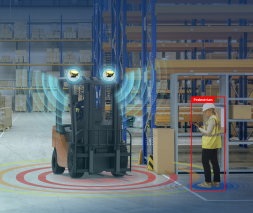
TRIO SAFE AI combines AI-powered visual detection with UWB proximity technology to support forklift and pedestrian safety. Depending on the deployment, the system can identify pedestrians with or without wearable tags and provide alerts or configurable slowdown on compatible forklifts.
Facility-level AI monitoring solutions, including TRUE-AI and AI Risk Radar, can support the identification and analysis of defined risk events within monitored areas.
FleetBridge forklift fleet management provides operational information such as vehicle activity, impacts, utilization, and equipment performance.
Across these applications, enterprise customers should evaluate how connected devices, operational data, platform access, and cloud services are secured within their specific deployment.
Trio Mobil's ISO 27001 certification provides information security management assurance within its defined scope. It should not be interpreted as a separate certification of every product, safety function, or deployment configuration.
What Should Enterprises Look for in a Secure Industrial Safety Technology Provider?
Selecting connected industrial safety technology requires both operational and technical evaluation.
Organizations should understand how a system supports workplace safety and how the supplier manages information security throughout deployment and ongoing operation.
An effective evaluation should cover the following questions:
- Does the provider hold independently verifiable information security certifications?
- Which legal entity, services, and activities are included in the certification scope?
- How is operational and personal data protected during transmission and storage?
- What authentication and access controls are available?
- Where is customer data stored, and under what conditions can it be accessed from other jurisdictions?
- How are software updates, vulnerabilities, and security incidents managed?
- What happens to local safety functions if network connectivity is interrupted?
- Can the supplier provide appropriate data processing terms, technical documentation, and security assurance evidence?
These questions complement the operational criteria used to evaluate industrial safety systems.
For additional guidance, read Choosing Forklift Safety Technology in 2026: A Decision Guide for Safety Leaders.
Organizations comparing detection architectures can also explore Forklift Collision Avoidance Systems Compared: UWB vs. Camera-Based Detection.
Building Confidence in Connected Industrial Safety
As industrial operations adopt more connected safety technologies, information security becomes an increasingly important part of supplier evaluation and long-term technology management.
ISO 27001 provides a recognized framework for demonstrating structured information security governance, risk management, and continual improvement.
For manufacturers and logistics organizations, independently assessed information security practices can support more informed procurement decisions and collaboration between EHS, engineering, IT, and OT teams.
Trio Mobil combines AI-powered industrial safety technologies with ISO 27001-certified information security management to support the requirements of connected industrial environments.
Contact Trio Mobil to discuss your industrial safety requirements and request information about our approach to security, data protection, and enterprise deployment.
Key Takeaways
ISO 27001 provides a foundation for evaluating information security management, while product-specific assurance remains an important part of industrial technology selection.
- ISO/IEC 27001:2022 is an international standard for information security management systems.
- Certification demonstrates independent assessment of an organization's ISMS within a defined scope.
- Connected industrial safety systems may process safety events, video, proximity information, and operational data.
- Confidentiality, integrity, availability, access management, and data protection are relevant to connected safety technology.
- Trio Mobil holds ISO/IEC 27001:2022 certification and documents security measures for its cloud-connected industrial safety solutions.
- ISO 27001 certification does not independently certify every connected device or establish compliance with all product safety and cybersecurity regulations.
- Enterprise buyers should evaluate both information security governance and product-level technical assurance.
Frequently Asked Questions
What is ISO 27001 certification?
ISO 27001 certification demonstrates that an organization's information security management system has been independently assessed against ISO/IEC 27001 requirements within a defined scope.
Is Trio Mobil ISO 27001 certified?
Yes. Trio Mobil's documented certification is ISO/IEC 27001:2022, certificate number 2024/ISMS/001042, initially issued on October 4, 2024. The certificate's current validity, legal entity, and scope should be confirmed through the issuing certification body.
Why is ISO 27001 important for industrial safety technology?
Connected safety systems may process operational information, safety events, images, and personal data. ISO 27001 provides a structured framework for managing the information security risks associated with these activities.
Does ISO 27001 certification mean an AI forklift safety system is secure?
ISO 27001 certification provides evidence of independently assessed information security management practices within a defined scope. It does not guarantee the security of an individual product or replace technical security testing.
Does ISO 27001 certification guarantee GDPR compliance?
No. ISO 27001 supports information security risk management, while GDPR establishes specific legal requirements for personal data processing. Organizations must assess their applicable GDPR obligations separately.
What should companies ask industrial safety technology providers about data security?
Companies should request information about certifications, security architecture, encryption, access controls, data retention, international transfers, incident management, and relevant data processing agreements.
Disclaimer
ISO/IEC 27001 certification applies to the certified information security management system within its documented scope. It does not constitute a guarantee against cybersecurity incidents or independently certify every product or installation. Trio Mobil safety solutions are operator-assist technologies designed to support safer operations. They do not replace training, supervision, or safe operating procedures and cannot prevent all incidents. Performance depends on deployment conditions, configuration, and applicable equipment integration.

Product Catalogue 2026
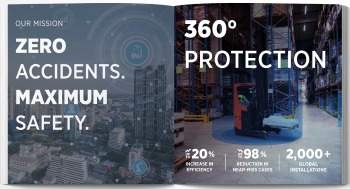
Download our catalog and gain access to a wealth of information on how to enhance industrial safety and efficiency. Our latest catalog features a diverse range of products and services that can help you achieve your goals.
Our Latest Blogs


Learn more about Trio Mobil's Solutions
Fill out the form and we'll contact you!