


Trio Mobil Global Technology Innovation Leader in AI-Based Industrial Safety
Read the Frost & Sullivan Analysis

Forklift Collision Avoidance Systems Compared: UWB vs. Camera-Based Detection
 Aug 21, 2026
 4 min
4 min 463
463
Forklift collision avoidance technologies have evolved rapidly in recent years. Today, safety leaders can choose from multiple approaches, with Ultra-Wideband (UWB) and AI camera-based detection among the most widely adopted.
While these technologies share the same objective of improving operational awareness, they solve different safety challenges. Understanding where each performs best is essential when selecting the right solution for your facility.
In this guide, we'll compare UWB and AI camera-based collision avoidance systems, explain the strengths and limitations of each technology, and explore why many organizations are adopting a multi-layered safety strategy that combines both approaches for broader operational coverage.
What Is a Forklift Collision Avoidance System?
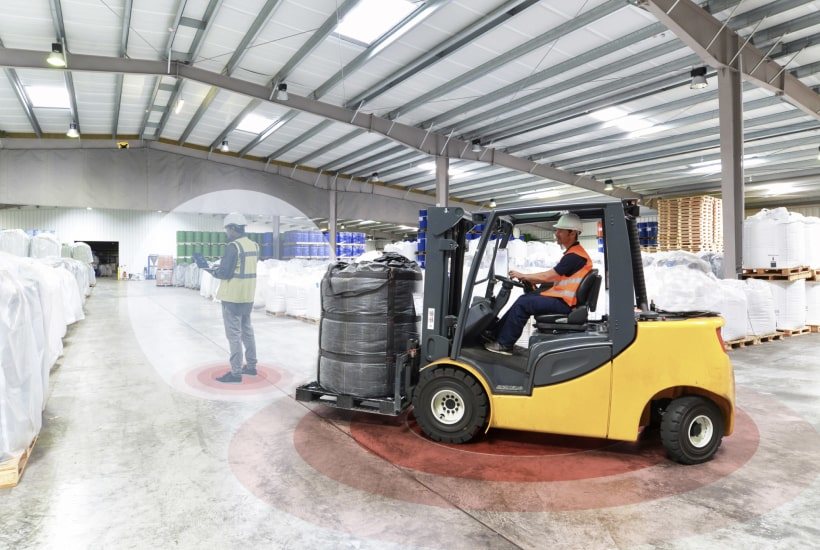
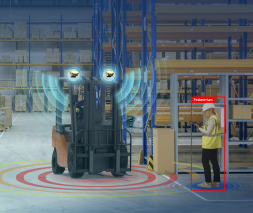
A forklift collision avoidance system is an operator-assist technology designed to help identify potential collision risks involving forklifts, pedestrians, vehicles, or workplace infrastructure. Depending on the technology used, these systems may provide audible, visual, or vehicle-based alerts when predefined risk conditions are detected.
Modern collision avoidance systems can support:
- Forklift-to-pedestrian awareness: Identifying situations where pedestrians and forklifts come within defined proximity thresholds.
- Forklift-to-forklift detection: Helping operators recognize approaching vehicles in shared operating areas.
- Blind spot monitoring: Improving awareness around shelving, corners, intersections, and other obstructed areas.
- Restricted zone protection: Detecting activity around designated operational zones.
- Operational visibility: Collecting event data that helps safety teams identify recurring exposure areas.
Unlike traditional warning devices that provide the same alert regardless of context, modern collision avoidance technologies use real-time data to deliver more relevant warnings based on the surrounding environment. As part of a broader forklift monitoring system, these technologies also help safety teams identify recurring risk patterns and improve operational visibility. Learn more in our guide on What Is a Forklift Monitoring System and Why Your Warehouse Needs One.
Why Collision Avoidance Requires More Than One Technology
Every industrial facility has different operating conditions.
Some risks develop in open warehouse aisles where cameras have a clear view of approaching pedestrians. Others occur around blind corners, behind warehouse racking, or at busy intersections where visual detection alone may not provide sufficient awareness.
This is why comparing UWB and AI cameras as competing technologies can oversimplify the decision.
Instead, safety leaders increasingly evaluate how different sensing technologies complement one another within a broader safety strategy.
UWB vs. AI Camera-Based Detection
Both technologies improve forklift safety, but they work in fundamentally different ways.
| Capability | UWB | AI Camera |
|---|---|---|
| Blind spot detection | ★★★★★ | ★★☆☆☆ |
| Through-rack awareness | ★★★★★ | ✕ |
| Forklift-to-forklift detection | ★★★★★ | ★★☆☆☆ |
| Forklift-to-pedestrian detection | ★★★★★ | ★★★★★ |
| Pedestrian recognition with vision | ✕ | ★★★★★ |
| PPE detection | ✕ | ★★★★★ |
| Unsafe behavior detection | ✕ | ★★★★★ |
| Object classification | ✕ | ★★★★★ |
| Performance in low-light conditions | ★★★★★ | Configuration dependent |
| Contextual scene analysis | Limited | ★★★★★ |
The comparison shows that each technology contributes different capabilities rather than replacing the other.
Why UWB Excels Where Cameras Cannot See
Ultra-Wideband technology measures the distance between compatible tags and vehicles with high accuracy, making it particularly effective in environments where direct visibility is limited.
Typical applications include:
- Blind intersections: Detects approaching forklifts before operators establish visual contact.
- Warehouse racking: Supports proximity awareness even when shelving blocks visibility.
- Cross aisles: Identifies pedestrians entering forklift travel routes from hidden areas.
- Forklift-to-forklift interactions: Helps operators recognize nearby vehicles in shared operating zones.
- High-density traffic: Supports consistent proximity awareness in busy warehouse environments.
Because UWB relies on radio positioning rather than optical detection, its performance is not dependent on line of sight in the same way as camera-based systems.
To learn more about proximity technologies, read What Is a Forklift Proximity Sensor and How Does It Prevent Accidents in the Workplace?
Why AI Cameras See What UWB Cannot Understand
AI cameras contribute a different layer of awareness by interpreting the visible environment instead of measuring proximity alone.
Within their monitored field of view, AI cameras can support:
- Pedestrian recognition: Distinguishing people from forklifts, vehicles, and other workplace objects.
- Object classification: Identifying forklifts, pallets, equipment, and infrastructure.
- PPE monitoring: Detecting selected personal protective equipment, depending on deployment.
- Behavior analysis: Identifying predefined unsafe actions, such as entering restricted areas.
- Near-miss review: Recording visual evidence that supports incident investigation and operational analysis.
Rather than simply identifying that something is nearby, AI vision helps explain what is happening and why an interaction occurred.
Learn more about AI-powered pedestrian monitoring in our guide to Pedestrian Detection Camera Solutions for Different Industries.
Different Technologies for Different Risk Scenarios
Comparing technical specifications only tells part of the story. A more effective approach is to evaluate the types of operational risks present in your facility and select technologies that address those specific challenges.
Every operation has a unique mix of blind intersections, pedestrian crossings, loading docks, and shared traffic routes. Rather than selecting one technology over another, many organizations deploy UWB and AI cameras together to build a multi-layered safety strategy that provides broader operational coverage.
When evaluating your operational environment, consider questions such as:
- Where do forklift and pedestrian interactions occur most frequently?
- Which areas have limited visibility due to racking, corners, or infrastructure?
- Do you need proximity awareness, visual context, or both?
- Can a single technology address every high-risk area across your operation?
Answering these questions helps determine where UWB, AI vision, or a combination of both can provide the greatest value.
To explore why leading industrial operations are increasingly combining AI vision and UWB into a single safety architecture, read our guide on How Layered AI + UWB Systems Improve Forklift Safety at Scale.
Why Leading Operations Combine Both Technologies
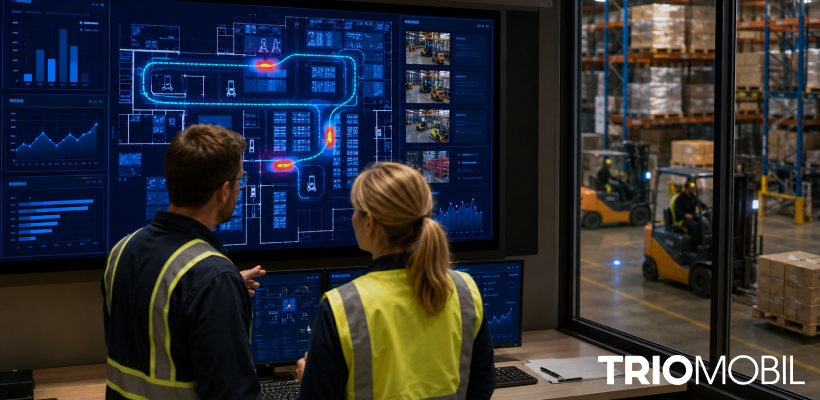
Modern industrial environments rarely present a single type of collision risk. Blind intersections, open aisles, loading docks, and shared traffic zones each create different operational challenges.
Rather than relying on a single sensing technology, many organizations combine UWB and AI vision to improve awareness across multiple risk scenarios.
| Risk Scenario | UWB | AI Camera | Why It Matters |
|---|---|---|---|
| Blind intersections | ✓ | ○ | Detects approaching forklifts before visual contact. |
| Warehouse racking | ✓ | ✕ | Supports proximity awareness despite physical obstructions. |
| Open pedestrian walkways | ✓ | ✓ | Combines proximity alerts with visual confirmation. |
| Forklift-to-forklift interactions | ✓ | ○ | Helps operators recognize nearby vehicles. |
| PPE compliance | ✕ | ✓ | Identifies predefined PPE within the camera's field of view. |
| Restricted zones | ○ | ✓ | Monitors unauthorized access to designated areas. |
| Near-miss analysis | ○ | ✓ | Provides visual records to support safety investigations. |
| Complex mixed-traffic operations | ✓ | ✓ | Delivers broader operational awareness. |
✓ = Primary capability ○ = Can support depending on deployment ✕ = Not typically applicable
No single technology addresses every operational challenge. A layered approach allows each technology to contribute where it performs best.
How Trio Safe AI Combines UWB and AI Vision
Different areas of a facility require different types of protection. A blind warehouse intersection presents different risks than an open loading dock or a pedestrian crossing.
Trio Safe AI combines UWB proximity detection and AI-powered computer vision within a single safety platform, allowing organizations to deploy the most appropriate technology for each operational environment.
Depending on system configuration, the platform can support:
- Forklift-to-pedestrian detection using UWB tags and proximity measurement.
- Forklift-to-forklift collision avoidance in shared operating areas.
- AI-powered pedestrian detection within the camera's monitored field of view.
- Blind spot monitoring around intersections and warehouse aisles.
- Zone-based safety controls, including configurable alerts and automatic slowdown when integrated with compatible vehicle controls.
- Near-miss recording and analytics to support continuous safety improvement.
- Centralized reporting across forklifts, facilities, and operational zones.
Instead of choosing between UWB and AI vision, organizations can deploy both technologies where they provide the greatest operational value.
Benefits of a Multi-Layered Collision Avoidance Strategy
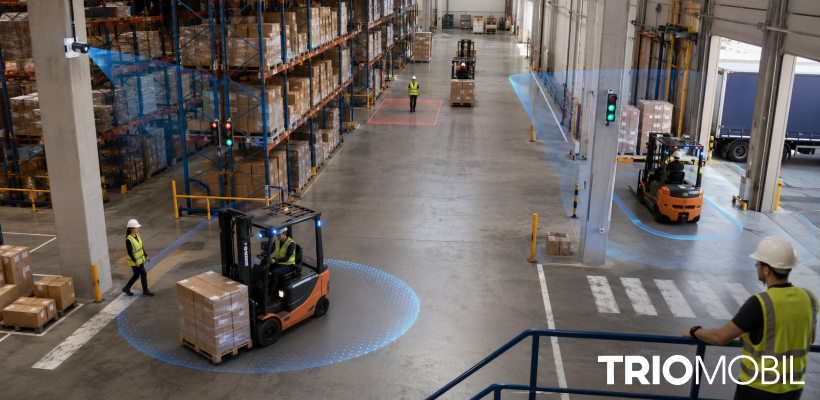
Combining complementary technologies can provide broader operational coverage than relying on a single sensing method alone.
Key benefits include:
- Improved blind spot awareness: UWB helps detect tagged pedestrians and vehicles in areas with limited visibility.
- Greater contextual understanding: AI cameras distinguish pedestrians, forklifts, and workplace objects within their monitored field of view.
- More consistent protection across different environments: Different technologies can be deployed based on operational risk.
- Better operational visibility: Event data helps identify recurring exposure areas and traffic patterns.
- Scalable safety architecture: Additional technologies and monitored zones can be incorporated as operations evolve.
For organizations looking to strengthen forklift safety, the goal is often not deploying more alerts, but deploying the right technology in the right location.
How to Choose the Right Collision Avoidance System
The best solution depends on your facility layout, traffic patterns, and operational risks rather than any single technology specification.
When evaluating a collision avoidance system, consider whether it can:
- Support both forklift-to-pedestrian and forklift-to-forklift interactions.
- Address blind spots as well as open operating areas.
- Provide actionable operational data in addition to real-time alerts.
- Scale across multiple facilities and forklift fleets.
- Integrate with other workplace safety technologies.
- Adapt as facility layouts and workflows change.
If you're evaluating a broader connected safety strategy, our guide on Choosing Forklift Safety Technology in 2026: A Decision Guide for Safety Leaders provides additional guidance.
Building a Multi-Layered Safety Strategy
Choosing between UWB and AI cameras is only one part of the decision.
The broader objective is creating a safety strategy that addresses the diverse risks present across modern industrial operations. Because different technologies excel in different environments, many organizations are adopting multi-layered safety architectures that combine complementary detection methods within a single platform.
Trio Safe AI brings together UWB proximity detection, AI-powered vision, and centralized operational analytics to help organizations improve workplace awareness across forklifts, pedestrians, and facility traffic.
Learn how Trio Safe AI can support your forklift safety strategy by exploring our forklift safety solutions or contacting our team for a personalized assessment.
Disclaimer: Trio Mobil solutions are operator-assist technologies designed to support workplace safety. They do not replace safe operating procedures, operator training, or workplace supervision, and they cannot prevent all incidents. System performance depends on deployment conditions, configuration, environmental factors, and compatible vehicle integration.
Key Takeaways
- UWB and AI cameras address different collision avoidance challenges.
- UWB performs particularly well in blind spots and non-line-of-sight environments.
- AI cameras provide visual context by recognizing people, vehicles, objects, and predefined behaviors.
- Many industrial facilities combine both technologies as part of a multi-layered safety strategy.
- Integrated platforms can improve operational visibility across forklifts, pedestrians, and facility traffic.
- The most effective collision avoidance strategy depends on operational risks, not a single sensing technology.
Frequently Asked Questions
Neither technology is universally better. UWB and AI cameras address different operational risks and are often deployed together to provide broader coverage.
When compatible UWB tags are used and the system is properly configured, UWB can support proximity detection even when direct visual contact is unavailable.
No. AI cameras provide visual interpretation of the environment, while proximity technologies measure distance. Many facilities use both technologies together.
Yes. Integrated platforms such as Trio Safe AI combine UWB and AI vision to support multiple layers of operational awareness across different workplace scenarios.
No. Collision avoidance technologies are operator-assist systems designed to support situational awareness and help reduce operational risk. They do not replace safe operating procedures, operator training, or workplace supervision.

Product Catalogue 2026
Download our catalog and gain access to a wealth of information on how to enhance industrial safety and efficiency. Our latest catalog features a diverse range of products and services that can help you achieve your goals.
Our Latest Blogs


Learn more about Trio Mobil's Solutions
Fill out the form and we'll contact you!