

Trio Mobil Global Technology Innovation Leader in AI-Based Industrial Safety
Read the Frost & Sullivan Analysis

What Is Forklift Telemetry and How Does It Improve Forklift Safety?
 March 31, 2026
 4 min
4 min 473
473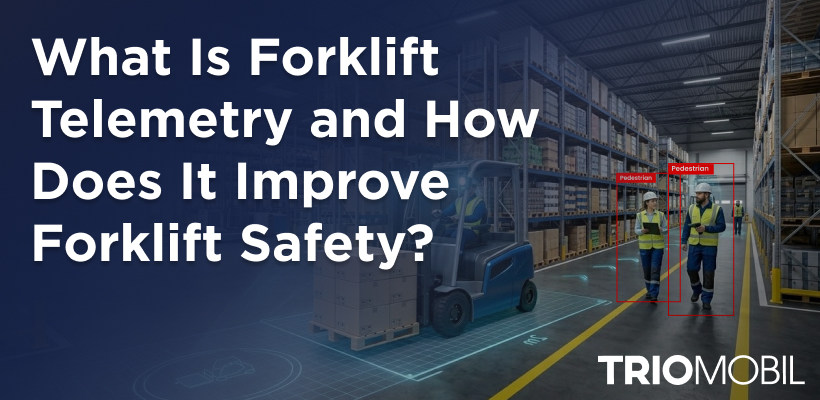
Forklifts are essential to modern manufacturing, warehousing, and intralogistics operations. They move materials continuously across production lines, warehouses, and distribution centers.
Despite their operational importance, forklifts remain involved in a significant share of workplace safety incidents. One of the primary reasons is the limited visibility safety teams have into daily equipment interactions.
Forklift telemetry introduces real-time operational data into safety management. By monitoring equipment behavior, movement patterns, and environmental interactions, organizations gain a clearer understanding of how forklifts operate within complex industrial environments.
This article explains what forklift telemetry is, how it works, and how real-time operational data can help organizations identify safety risks, monitor forklift activity, and improve workplace safety in complex industrial environments.
What Is Forklift Telemetry?
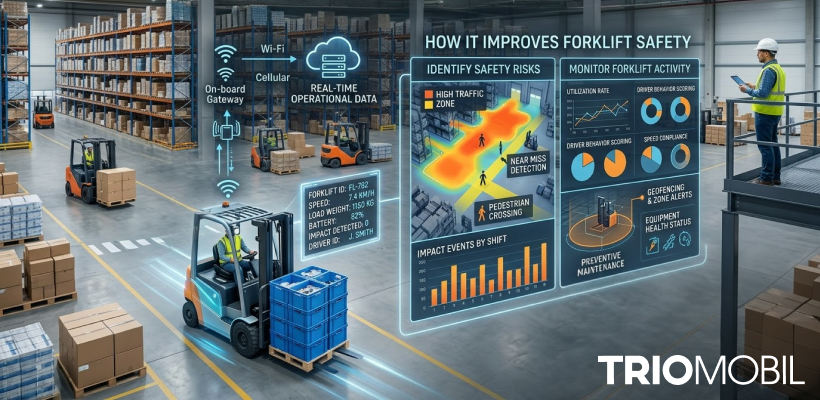
Forklift telemetry refers to the real-time collection, transmission, and analysis of operational data generated by forklifts and their surrounding environments. These systems transform everyday equipment activity into structured data that safety teams can analyze.
Telemetry systems rely on connected sensors, IoT devices, and monitoring platforms to capture signals from forklifts as they move through a facility. This data can then be used to identify operational patterns, detect emerging safety risks, and support more informed safety decisions.
Typical Data Captured by Forklift Telemetry Systems
Forklift telemetry platforms collect multiple types of operational signals that help organizations understand how equipment is used across the facility.
Common telemetry data points include:
- Vehicle movement and location
- Speed and braking patterns
- Proximity interactions with pedestrians or other forklifts
- Equipment operating hours
- Near-miss events and safety alerts
- Environmental interactions within industrial spaces
When analyzed collectively, these signals provide safety teams with a more comprehensive view of equipment behavior and workplace risk conditions.
Why Forklift Operations Create Hidden Safety Risks
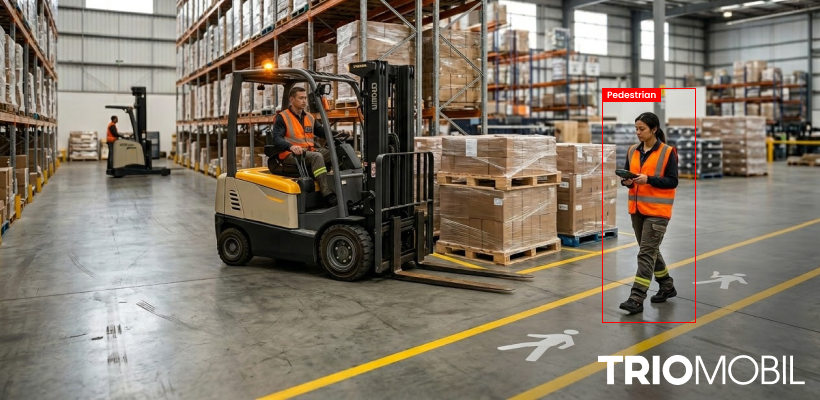
Forklift operations occur in highly dynamic environments where people, vehicles, and materials share the same workspace. These conditions can create safety challenges that are difficult to detect through manual observation alone.
Many safety programs rely on incident reports or periodic safety audits. While these methods are important, they may not capture the everyday operational patterns that contribute to risk.
Several operational factors contribute to hidden forklift safety risks:
- Limited visibility zones around forklifts
- High pedestrian traffic in intralogistics environments
- Constantly changing traffic patterns in warehouses
- Manual reporting gaps that miss near-miss events
- Safety processes that focus primarily on incident response
Many of these operational risks emerge in environments where forklifts and pedestrians share the same space. Our article on forklift pedestrian accident prevention explores these interaction risks in greater detail.
How Forklift Telemetry Works
Forklift telemetry systems combine multiple connected technologies that capture and analyze operational signals from forklifts and their surroundings. These technologies create a continuous monitoring layer across industrial facilities.
Together, they allow safety teams to observe how forklifts move, how equipment interacts with pedestrians, and where potential risk conditions emerge.
IoT Sensors and Connected Devices
IoT sensors installed on forklifts collect operational data such as movement, speed, braking patterns, and equipment status. These sensors continuously transmit telemetry signals to centralized monitoring platforms.
By capturing equipment activity in real time, IoT devices help create a digital record of forklift behavior across shifts and operational zones.
UWB Proximity Detection
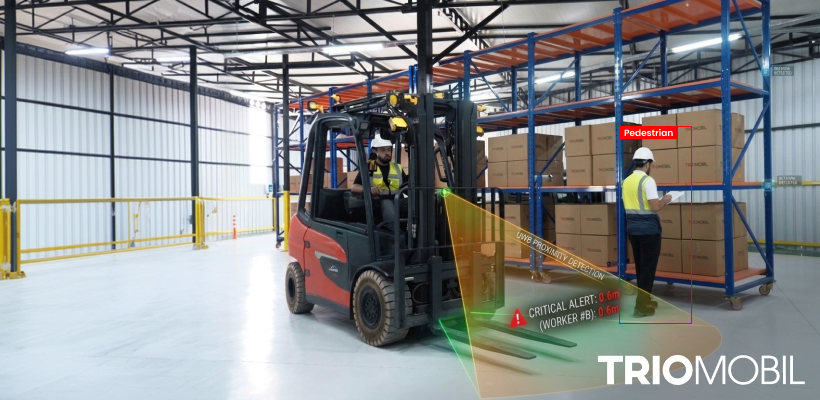
Ultra-wideband technology measures the distance between forklifts, pedestrians, and infrastructure with high precision. This allows the system to identify when equipment and people come into close proximity.
These proximity measurements support earlier awareness of high-risk interactions within shared workspaces.
Many organizations combine telemetry with proximity detection technologies to improve situational awareness. Our article on layered AI and UWB forklift safety systems explains how these technologies work together.
AI-Powered Monitoring Platforms
AI-powered monitoring platforms analyze telemetry data to identify patterns and detect conditions that may indicate elevated risk. By continuously processing incoming signals, AI systems help highlight operational trends that may otherwise remain unnoticed.
This analysis supports a more proactive approach to safety management.
Real-Time Alerts and Notifications
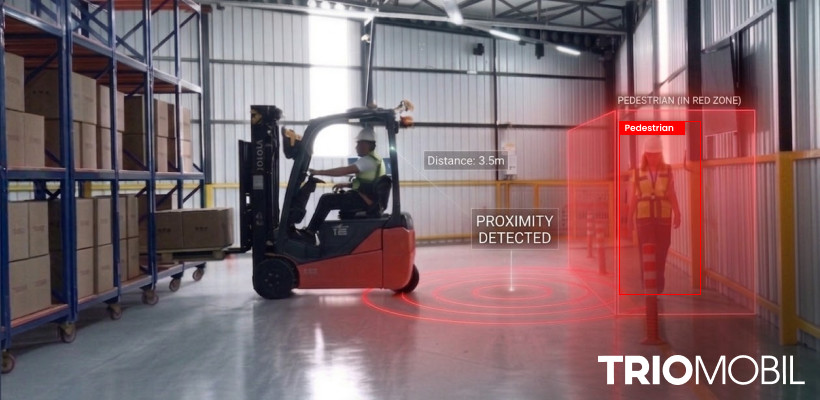
When predefined safety thresholds are reached, such as close proximity between equipment and pedestrians, the system can trigger visual or audible alerts. These alerts help operators become aware of potential hazards within their surroundings.
Real-time notifications support quicker reactions in situations where situational awareness is critical.
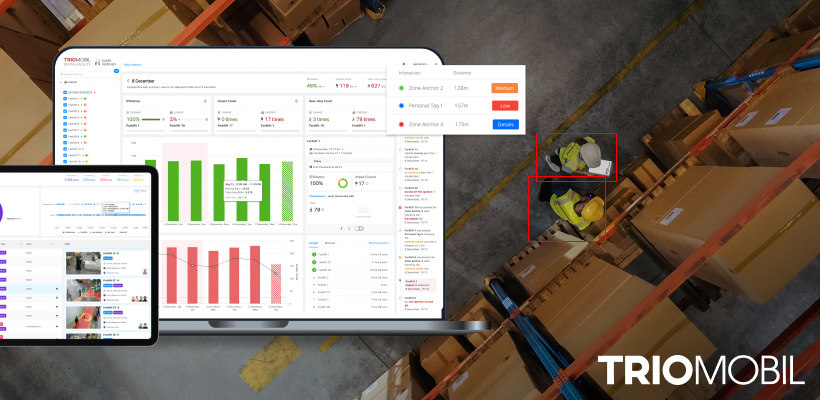
Centralized Safety Dashboards
All telemetry data can be aggregated within centralized digital dashboards. These dashboards allow safety teams to monitor equipment activity, review operational trends, and identify risk hotspots across facilities.
This centralized visibility helps organizations move from reactive safety management toward data-informed prevention strategies.
Key Safety Insights Generated by Forklift Telemetry
Forklift telemetry systems generate operational insights that extend beyond traditional safety reporting. By continuously monitoring equipment behavior, telemetry platforms can reveal patterns that help organizations understand where risks develop.
These insights often include:
- Identification of high-traffic zones where pedestrian interactions occur frequently
- Detection of recurring near-miss patterns
- Visibility into operator behavior trends across shifts
- Understanding of equipment interactions in blind spots
- Data-driven guidance for improving traffic flow and safety procedures
These insights help safety teams focus on leading indicators, not only incident outcomes.
How Telemetry Improves Forklift Safety
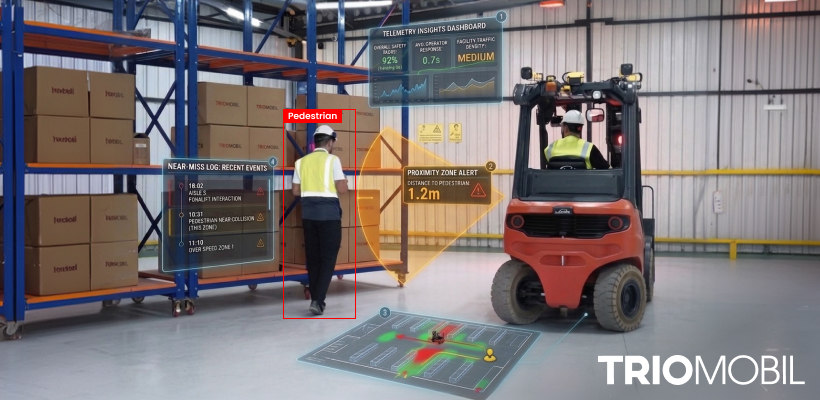
Forklift telemetry strengthens safety programs by improving operational visibility, enabling early risk detection, and supporting data-driven decision making. These capabilities help organizations better understand how equipment interacts with people and infrastructure.
Real-Time Situational Awareness
Telemetry systems continuously monitor forklift activity across the facility. This monitoring provides safety teams with visibility into traffic density, equipment movement patterns, and operational conditions.
Greater awareness helps organizations identify potential safety challenges earlier.
Early Detection of High-Risk Interactions
Telemetry systems can detect conditions such as forklifts approaching pedestrians or equipment interactions in congested zones. These signals help highlight areas where safety risks may be increasing.
Early detection supports preventive safety actions before incidents occur.
Near-Miss Visibility and Leading Indicators
Near-miss events often reveal underlying operational risks that may not appear in incident reports. Telemetry platforms can capture and document these interactions automatically.
Understanding and analyzing near-miss events is an important part of modern safety programs. You can explore practical strategies in our guide to forklift safety rules and operational best practices.
Data-Driven Safety Improvements
Telemetry data allows organizations to evaluate operational safety performance using real-world evidence. Safety teams can adjust traffic flow, update safety procedures, and improve training programs based on telemetry insights.
This approach helps shift safety management toward continuous improvement.
Key Features of an Effective Forklift Telemetry System
Not all telemetry platforms provide the same level of operational visibility. Effective systems combine reliable data collection with advanced analytics and scalable monitoring capabilities.
Organizations evaluating forklift telemetry solutions should consider several important capabilities.
Real-Time Data Collection
An effective telemetry system continuously monitors forklift movement, speed, and operational status. Real-time data collection ensures that safety teams have up-to-date visibility into equipment activity.
Proximity Detection Integration
Telemetry platforms often integrate with technologies such as UWB proximity detection to monitor interactions between forklifts, pedestrians, and other equipment. This integration strengthens situational awareness in shared workspaces.
Near-Miss Event Detection
Automated detection of near-miss events allows organizations to capture safety signals that might otherwise go unreported. These events often provide valuable insight into emerging risks.
Centralized Monitoring Platform
A unified monitoring platform allows safety teams to review telemetry signals, analyze operational trends, and track safety performance across facilities.
Scalability Across Multiple Sites
Industrial organizations frequently operate across multiple plants, warehouses, and logistics centers. Telemetry systems should support scalable monitoring across these environments.
Integration with AI Monitoring Systems
AI-driven monitoring systems are increasingly used to analyze operational risk signals in industrial environments. Combining telemetry with AI-powered monitoring technologies provides broader insight into environmental risk conditions. This integration allows organizations to analyze both equipment behavior and environmental interactions.
Learn more about this approach in our article on how AI-powered risk monitoring reduces high-risk events.
How Trio Mobil Integrates Telemetry into Forklift Safety Architecture
Forklift telemetry delivers the most value when it operates within a connected safety ecosystem rather than as a standalone monitoring tool. By combining multiple sensing technologies, organizations gain broader visibility into equipment behavior and workplace interactions.
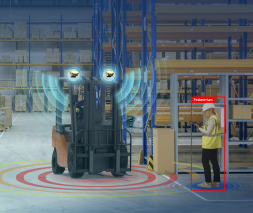
Trio Mobil integrates forklift telemetry with AI-powered computer vision and UWB proximity detection to create a multi-layered safety architecture across industrial environments.
FleetBridge: The Telemetry Platform
At the center of this architecture is FleetBridge, Trio Mobil’s forklift telemetry and fleet management platform. FleetBridge provides a centralized environment where organizations can monitor forklift activity, equipment utilization, and operational safety signals across facilities.
Real-Time Data Collection
Forklift-mounted IoT units continuously collect operational telemetry signals such as movement patterns, speed behavior, and equipment interactions. These signals are transmitted to the FleetBridge platform and processed in real time.
Connected Safety Intelligence
FleetBridge analyzes telemetry signals alongside data from AI vision systems and UWB proximity detection infrastructure. This connected architecture helps organizations understand how forklifts interact with pedestrians, infrastructure, and operational traffic flows.
Operational Visibility for Safety Teams
This integrated approach allows safety and operations teams to monitor:
- forklift movement patterns across facilities
- pedestrian proximity interactions in shared workspaces
- traffic density in operational zones
- near-miss signals detected through connected infrastructure
- equipment utilization trends across shifts
Centralized Safety Insights
All telemetry data is centralized within the FleetBridge dashboard, allowing EHS and operations teams to review safety indicators, analyze operational patterns, and support preventive safety strategies.
By combining forklift telemetry with AI monitoring and proximity detection technologies, Trio Mobil helps organizations build a data-driven approach to forklift safety and operational visibility.
The Future of Data-Driven Forklift Safety
Industrial safety is increasingly supported by real-time operational intelligence. Technologies such as forklift telemetry allow organizations to observe equipment interactions and workplace conditions continuously.
As manufacturing and intralogistics operations grow more complex, this level of visibility becomes essential for managing operational risk.
Forklift telemetry transforms everyday equipment activity into actionable safety insights. When combined with AI monitoring and proximity detection technologies, it supports a more proactive and data-driven approach to industrial safety.
If you are exploring how telemetry, AI monitoring, and proximity detection technologies could support your safety strategy, get a free safety consultation from the Trio Mobil team to learn how these systems can be adapted to your operational environment and long-term EHS objectives.
Disclaimer: Trio Mobil solutions are operator-assist aids. They do not replace safe working practices or prevent all incidents. Performance depends on operating conditions and configuration; see product documentation.

Product Catalogue 2026
Download our catalog and gain access to a wealth of information on how to enhance industrial safety and efficiency. Our latest catalog features a diverse range of products and services that can help you achieve your goals.
Our Latest Blogs


Learn more about Trio Mobil's Solutions
Fill out the form and we'll contact you!