


Trio Mobil Global Technology Innovation Leader in AI-Based Industrial Safety
Read the Frost & Sullivan Analysis

What Forklift Operator Behavior Should Safety Managers Actually Monitor?
 Oct 22, 2026
 3 min
 512
Forklift operator behavior is the set of observable actions involved in accessing, inspecting, driving, maneuvering, handling, and securing a powered industrial truck. For safety managers, the most useful behaviors are those connected to a defined risk, supported by reliable evidence, and open to practical improvement.
A sharp brake event may reflect speed, a pedestrian entering the route, a shifting load, or a damaged floor. Repeated reversing may indicate a route design problem. The surrounding task, location, traffic, and equipment condition give the event meaning.
This article explains which forklift operator behaviors deserve attention, which signals are easy to misread, and how safety teams can turn patterns into coaching, engineering changes, maintenance decisions, and better work planning.
What Is Forklift Operator Behavior Monitoring?
Forklift operator behavior monitoring is the structured collection and review of safety-relevant operating events associated with forklift use. Data may come from telematics, access-control records, impact sensors, vehicle inputs, location systems, cameras, proximity systems, checklists, observations, and incident reviews. Available detail depends on the equipment and integrations installed.
The aim is to identify recurring exposure and understand why it occurs. A useful program verifies events, compares similar tasks, and connects findings to action. What Is Forklift Activity Tracking and How Can It Optimize Safety and Efficiency? explains how movement, waiting, and utilization data provide additional operational context.
Which Forklift Operator Behaviors Should Safety Managers Monitor?
Priorities should follow the facility's risk assessment, traffic plan, truck types, loads, and work areas. The following categories provide a practical starting point when suitable data is available.
1. Authorized Access and Pre-Operation Checks
Confirming who accessed a forklift and whether the required pre-operation process was recorded establishes the beginning of the operating sequence. Access data can support authorization controls, while checklist records can show completion, reported defects, and whether a truck entered a restricted mode after a failed check.
A completed digital checklist does not confirm the quality of the physical inspection. Compare records with observations, maintenance reports, and manufacturer requirements. Forklift Inspections & Pre-Operation Checklist: Best Practices for Safe Operations provides a fuller review.
2. Speed in the Context of the Zone
Speed should be reviewed against posted limits, surface conditions, visibility, load stability, pedestrian activity, and the stopping space available. A single sitewide threshold can hide important differences between an open travel lane, a blind intersection, a dock approach, and a congested production area.
3. Harsh Braking Acceleration and Turning
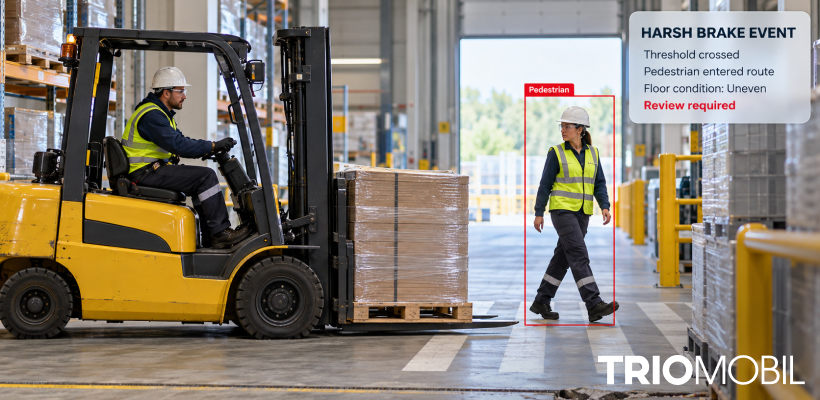
Rapid changes in vehicle motion can help identify interactions that deserve review. Repeated harsh braking near the same crossing may reveal limited sightlines or poor traffic sequencing. Strong acceleration or turning events may also relate to surface conditions, vehicle settings, sensor mounting, load characteristics, or task pressure.
4. Reversing Visibility and Route Choices
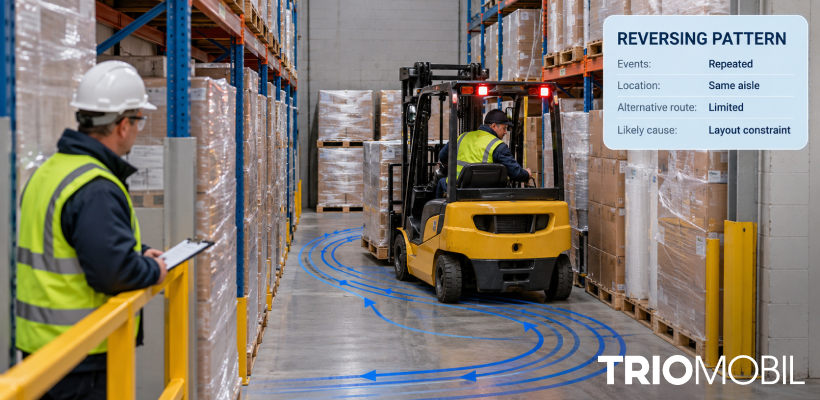
Reversing frequency, duration, and location can reveal where operators have limited alternatives or where layout changes could reduce difficult maneuvers. Observations may also examine whether operators look in the direction of travel, keep a clear view of the route, use designated paths, and follow local rules for horns and crossings.
5. Following Distance and Vehicle Pedestrian Interactions
Close following, repeated proximity events, and vehicle-pedestrian interactions can indicate where traffic density and route design create exposure. The most useful review includes relative movement, distance or zone, location, time, visibility, and whether the people or vehicles were equipped for the sensing method used.
An alert count alone cannot confirm a near miss or assign responsibility. Validate the event and examine how the interaction developed. What Is a SIF Precursor? AI-Based Near-Miss Detection in Forklift Safety explains why precursor review focuses on the conditions that allow serious exposure to form.
6. Impacts and the Response That Follows
Impact sensors can flag motion that exceeds a configured threshold. A recorded impact should trigger a defined review process that considers sensor data, location, equipment condition, load status, and available observations. Vibration from dock plates, damaged floors, load handling, or sensor placement can affect the signal.
7. Parking Shutdown and Unattended Truck Practices
Parking location, shutdown sequence, key or access status, and time left running can support review of unattended truck practices when the required inputs are available. These records can help identify recurring issues near fire routes, pedestrian paths, charging areas, docks, or other controlled spaces.
Which Data Can Be Misleading Without Context?
Behavior data can support fair and focused decisions when teams understand what each signal measures. Several common metrics become misleading when they are treated as direct evidence of safe or unsafe performance.
| Signal | What it establishes | Context required |
|---|---|---|
| Harsh brake event | A configured motion threshold was crossed | Traffic, obstacle, load, floor, sensor setting, and event sequence |
| Impact alert | Measured vibration or acceleration exceeded a threshold | Cause, severity, location, truck condition, and physical inspection |
| Proximity alert | A configured distance or detection rule was met | Movement, coverage, visibility, work task, and sensing limitations |
| Long ignition-on time | The vehicle remained switched on | Movement, handling, waiting, charging, break, or process delay |
| High event count | More recorded events occurred | Operating exposure, route, shift, truck type, workload, and detection settings |
Raw totals can make the busiest route or shift appear worse simply because it has more exposure. Compare verified events using a defined denominator such as movement hours, distance traveled, or completed tasks. Keep the count visible, apply consistent definitions, and avoid describing ignition-on hours as productive working time.
Review locations, truck types, schedules, layout, and workload before deciding whether coaching is appropriate. Data governance should define purpose, access, retention, review rights, and how workers can explain an event.
How Should Safety Managers Turn Patterns Into Action?
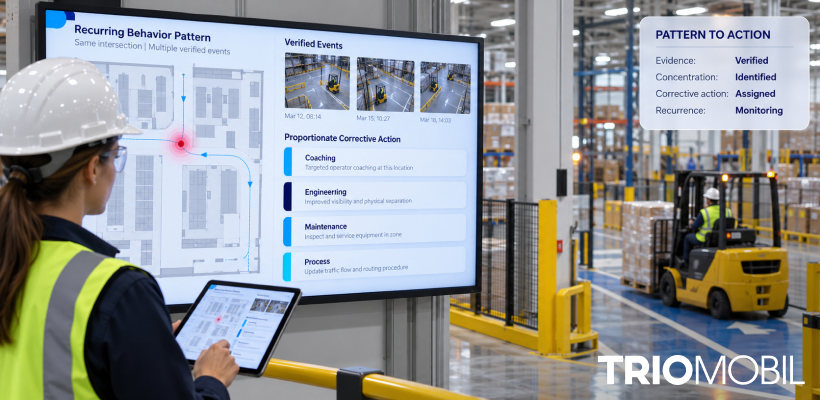
A behavior-monitoring program creates value when verified findings lead to proportionate action. The cause may involve the operator, vehicle, layout, process, or several factors together.
- Define the event: Document the signal, threshold, scope, and limitations before using it in a safety review.
- Verify the evidence: Examine the location, sequence, operating condition, and relevant observations before classifying the event.
- Look for concentration: Identify repeated patterns by zone, route, time, truck type, task, and comparable exposure.
- Select the response: Use coaching for a verified skills gap, engineering changes for layout or visibility issues, maintenance for equipment causes, and process changes for scheduling or workflow problems.
- Track completion: Assign ownership and dates for corrective action, then confirm that the agreed change was implemented.
- Measure recurrence: Review similar operating periods to determine whether the targeted pattern changes without creating new exposure elsewhere.
How Does OSHA Address Forklift Operator Performance?
For U.S. workplaces within its scope, OSHA's powered industrial truck standard, 29 CFR 1910.178, requires employers to ensure operators are trained and evaluated for safe operation. Paragraph 1910.178(l) addresses formal instruction, practical training, workplace evaluation, refresher training under specified circumstances, and performance evaluation at least once every three years.
Paragraph 1910.178(n) covers traffic rules, direction of travel, obstructed cross aisles, and speed that permits safe stopping. Technology may provide supporting evidence, while the employer remains responsible for training, evaluation, supervision, workplace controls, and applicable requirements.
How Trio Mobil Supports Forklift Behavior Visibility
Trio Mobil's FleetBridge forklift fleet management solution can combine selected forklift and operator records in a central platform. Published capabilities include utilization reporting, impact management, NFC-based operator access, real-time alarms, and digital pre-operation checklists. Available signals and responses depend on the hardware, integration, truck compatibility, and configuration selected for the deployment.
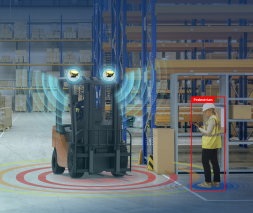
Trio Mobil's forklift safety and collision avoidance solutions can add context around selected forklift-pedestrian or vehicle interactions through AI vision, UWB proximity options, smart zones, and operator alerts. Performance depends on the monitored field of view, equipped devices, environmental conditions, installation, and event settings.
Monitor the Conditions That Shape Behavior
The strongest forklift operator behavior program connects observable actions to the conditions in which they occurred. Speed, braking, reversing, proximity, impacts, and checklist records become more useful when they are verified against the task, route, load, traffic, and equipment.
This approach supports fairer coaching and shows when a route change, maintenance action, revised schedule, or engineering control is more appropriate. It creates a practical basis for improvement.
Contact our team to discuss how Trio Mobil can support forklift behavior visibility and risk-focused fleet management across your operation.
Key Takeaways
These principles help safety managers build a behavior-monitoring program that is focused, fair, and actionable.
- Monitor defined risks: Select behaviors connected to the facility's trucks, routes, loads, and traffic conditions.
- Verify before classifying: A telematics or proximity event is a signal that requires operational context.
- Compare similar exposure: Use consistent definitions and suitable denominators for meaningful comparisons.
- Examine system causes: Layout, workload, vehicle condition, and process design can shape recorded behavior.
- Match action to cause: Choose coaching, engineering, maintenance, or process changes based on verified findings.
- Review governance: Define access, retention, review rights, and worker participation before using identifiable data.
Frequently Asked Questions
Prioritize behaviors connected to identified site risks. Common examples include authorized access, pre-operation checks, zone-specific speed, harsh motion, reversing, route use, proximity interactions, impacts, and parking practices when reliable data is available.
A harsh braking signal only shows that a configured motion threshold was crossed. Traffic, pedestrians, loads, floors, vehicle settings, and sensor configuration should be reviewed before the event is classified.
Raw rankings can be misleading because exposure differs by route, shift, workload, and truck type. Compare similar work using verified events and a defined exposure measure, then investigate system conditions before selecting an individual response.
No. Telematics can identify selected operating signals and recurring patterns, while direct observation and workplace evaluation provide essential context. Both should support training, supervision, and broader hazard controls.
Review frequency should reflect the risk, event severity, operating volume, and response process. Critical alerts may require prompt review, while recurring patterns can be assessed on a regular schedule and after meaningful changes to work or equipment.
The following answers clarify common questions about monitoring forklift operator behavior.
Disclaimer: Trio Mobil solutions are operator-assist aids. They do not replace safe working practices or prevent all incidents. Performance depends on operating conditions and configuration; see product documentation.

Product Catalogue 2026
Download our catalog and gain access to a wealth of information on how to enhance industrial safety and efficiency. Our latest catalog features a diverse range of products and services that can help you achieve your goals.

Our Latest Blogs


Learn more about Trio Mobil's Solutions
Fill out the form and we'll contact you!