


Trio Mobil Global Technology Innovation Leader in AI-Based Industrial Safety
Read the Frost & Sullivan Analysis

What Is a Forklift Alert System? Enhancing Operator Awareness and Reducing Collision Risks
 Aug 14, 2026
 4 min
4 min 399
399
Forklift alert systems are designed to improve operator and pedestrian awareness by providing timely warnings when potential workplace hazards are detected. Depending on the deployment, these warnings may be visual, audible, or generated through connected safety technologies.
Modern forklift alert systems have evolved beyond backup alarms and warning lights. Today's solutions can combine AI, computer vision, RTLS, UWB positioning, and zone-based technologies to deliver alerts based on real-time operating conditions.
In this guide, we'll explain what a forklift alert system is, how different alert technologies work, and what organizations should consider when selecting a solution for industrial operations.
What Is a Forklift Alert System?
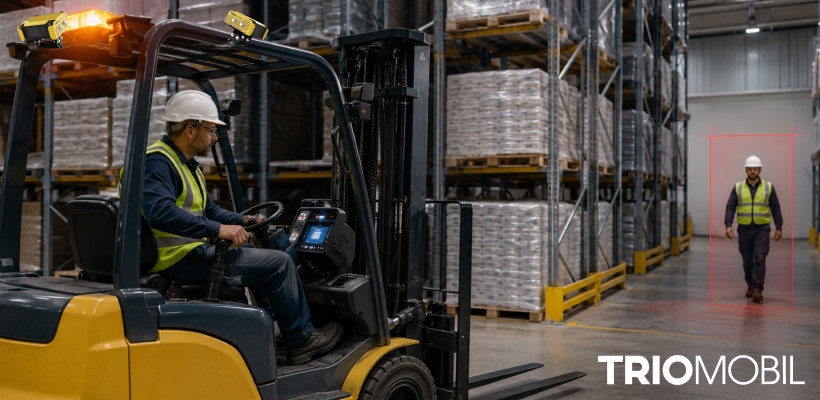
A forklift alert system is a safety technology designed to notify forklift operators, pedestrians, or both when conditions indicate an increased risk of collision or another workplace hazard.
The objective is straightforward: Improve situational awareness before an incident occurs.
Depending on the deployment, alerts may be triggered by vehicle movement, proximity between forklifts and pedestrians, excessive speed, restricted zones, blind intersections, or AI-based object detection.
A forklift alert system may include:
- Audible alerts to notify operators or nearby personnel
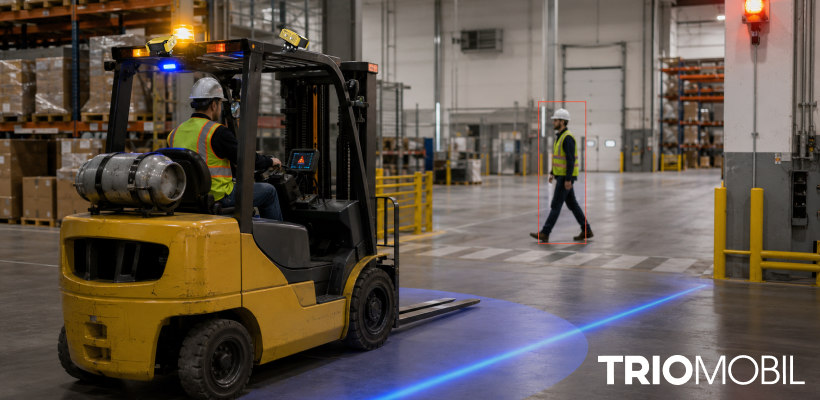
- Visual warnings such as LED indicators, projection lights, or dashboard notifications
- AI-powered camera alerts that identify pedestrians or obstacles
- Proximity detection technologies using UWB or RTLS
- Zone-based notifications for loading docks, intersections, or restricted areas
- Connected software platforms that log safety events for operational analysis
Rather than relying on a single warning method, many industrial facilities combine multiple alert technologies to address different types of operational risk.
Why Forklift Alert Systems Matter
Forklift operators work in environments where conditions can change quickly. Pedestrians, other forklifts, and limited visibility can all reduce the time available to recognize and respond to potential hazards.
A forklift alert system provides additional awareness by notifying operators or nearby workers when predefined risk conditions are detected. Depending on the technology used, alerts may support:
- Operator awareness during high-risk maneuvers
- Pedestrian visibility in shared work areas
- Blind spot awareness at intersections and obstructed aisles
- Traffic management through zone-based alerts
- Operational visibility by recording recurring safety events
Rather than replacing operator judgment or existing safety procedures, forklift alert systems provide additional information that helps people make better decisions in dynamic industrial environments.
Regulatory Considerations
Neither OSHA nor ANSI/ITSDF B56.1 requires organizations to install a specific forklift alert system.
However, both emphasize the importance of maintaining safe forklift operations, protecting pedestrians, and controlling workplace hazards.
For example:
- OSHA 29 CFR 1910.178 requires employers to maintain safe powered industrial truck operations and operator training.
- ANSI/ITSDF B56.1 provides guidance for the safe design, operation, and maintenance of powered industrial trucks.
- Many organizations also establish internal traffic management plans that define pedestrian routes, vehicle priorities, and restricted operating areas.
Alert systems can complement these safety programs by providing additional visibility into conditions that may require operator attention.
They should always be considered part of a broader workplace safety strategy rather than a standalone control.
Traditional Warning Methods vs. Intelligent Alert Systems
Traditional warning devices remain an important part of forklift safety.
However, many organizations now combine these controls with intelligent technologies that deliver more context-aware alerts based on the actual operating environment.
| Traditional Forklift Alerts | Intelligent Forklift Alert Systems |
|---|---|
| Backup alarms sound whenever the forklift reverses. | Alerts are triggered based on specific operational risks. |
| Warning lights provide a constant visual signal. | AI detects pedestrians, vehicles, or hazards in real time. |
| Operators rely primarily on line of sight. | Additional awareness is provided during limited-visibility situations. |
| Limited event recording. | Safety events can be logged for operational analysis. |
| Same warning regardless of context. | Alerts can vary depending on zones, proximity, or AI detection. |
Common Types of Forklift Alert Systems
Forklift alert systems are available in several forms, each designed to improve awareness in specific operating conditions. Many organizations use a combination of these technologies as part of a layered safety strategy.
Audible Warning Systems
Audible alarms remain one of the most common forklift safety measures.
These include:
- Reverse alarms
- Horn warnings
- Voice warning systems
- Area notification speakers
Their primary purpose is to notify nearby personnel that a forklift is operating nearby.
Visual Alert Systems
Visual warnings improve awareness without relying solely on sound.
Examples include:
- Blue safety lights
- Red danger zone lights
- LED warning beacons
- Ground projection systems
- Dashboard warning indicators
These systems are commonly used in facilities with elevated ambient noise levels.
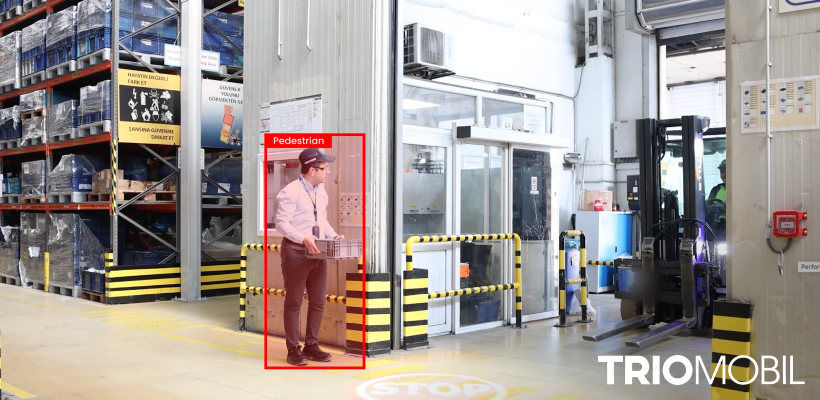
AI Camera-Based Alert Systems
AI-powered cameras continuously analyze the forklift's surroundings.
Rather than recording video alone, AI can identify operational conditions such as:
- Pedestrians entering the vehicle's travel path
- Unsafe following distances
- Blind spot activity
- Objects located near the forklift
When configured appropriately, the system can provide visual and audio alerts to help improve operator awareness.
To learn how AI-powered risk monitoring transforms real-time hazard detection into proactive safety improvements and helps reduce high-risk events across industrial operations, read our blog article, How AI-Powered Risk Monitoring Reduces High-Risk Events in Industrial Operations.
Proximity Alert Systems
Proximity detection technologies monitor the distance between forklifts, pedestrians, or other vehicles.
Depending on the deployment, these systems may use:
- UWB (Ultra-Wideband)
- RTLS
- RFID
- Other positioning technologies
When another object or person enters a predefined safety zone, alerts can be generated before vehicles become dangerously close. For a deeper understanding of forklift proximity sensors, detection technologies, and deployment best practices, read our guide, What Is a Forklift Proximity Sensor? Workplace Safety Guide.
Zone-Based Alert Systems
Certain workplace locations consistently present higher operational risk.
- Blind intersections
- Loading docks
- Warehouse entrances
- AGV crossing points
- Pedestrian crossings
- Battery charging areas
Examples include:
Zone-based alert systems automatically generate warnings whenever forklifts enter these predefined locations.
How AI and Connected Technologies Enhance Forklift Alert Systems
Modern forklift alert systems increasingly combine multiple technologies into a connected safety platform.
Instead of reacting only when a forklift reverses, organizations can create awareness based on operational context.
AI-powered pedestrian detection
Computer vision continuously analyzes the forklift's surroundings and provides alerts when pedestrians are detected within configured safety zones.
RTLS and UWB positioning
Real-time location technologies measure proximity between forklifts and pedestrians, even where direct line of sight may be limited, depending on deployment conditions.
Zone-based awareness
Connected infrastructure can identify when forklifts enter designated operational zones and trigger location-specific alerts.
Fleet-wide visibility
Connected platforms allow safety teams to review alert trends across multiple forklifts, helping identify recurring exposure areas and opportunities for operational improvement.
By combining multiple technologies, modern forklift alert systems can provide more relevant warnings based on the surrounding environment.
Learn more about how connected fleet data, operational insights, and centralized monitoring support safer forklift operations in our Forklift Fleet Management solution.
To better understand how AI-powered safety platforms monitor forklifts, pedestrians, vehicles, operational zones, and other workplace risks in real time, read our blog article, What Does a Real-Time AI Safety Platform Actually Monitor? 100+ Risk Category Breakdown.
How Trio Mobil Supports Intelligent Forklift Alert Systems
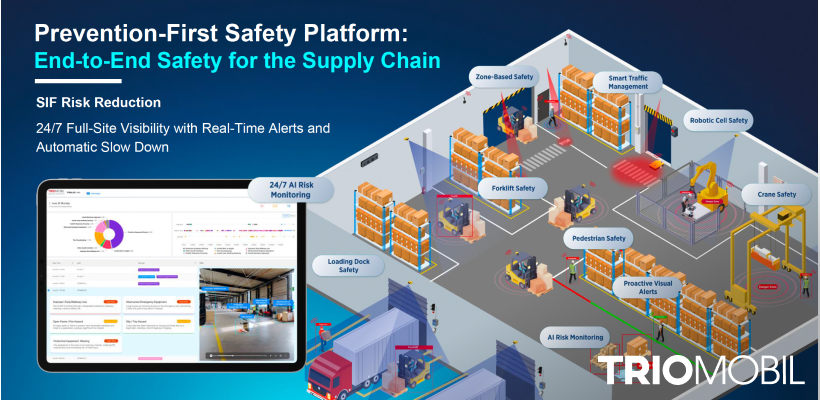
As industrial environments become more complex, forklift alert systems benefit from combining multiple sensing technologies rather than relying on a single warning device.
Trio Mobil's Trio Safe AI solution supports this layered approach by integrating AI vision, RTLS, UWB positioning, and connected infrastructure into a unified industrial safety solution.
Depending on deployment requirements, the platform can support:
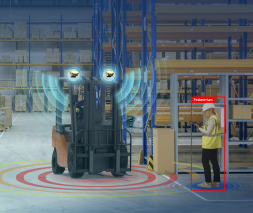
- AI-powered pedestrian detection using onboard cameras that provide visual and audio alerts to operators
- UWB-based proximity detection between forklifts and pedestrians for high-precision awareness
- Forklift-to-forklift detection to support collision awareness at intersections and shared traffic areas
- Zone Anchor infrastructure that enables location-based alerts and, when integrated with compatible vehicle controls, can support configurable speed management in designated areas
- Operational event reporting that helps safety teams review recurring exposure patterns and identify opportunities for continuous improvement
For broader facility monitoring, Trio Mobil’s Ai Risk Monitoring platform AI Risk Radar can complement forklift safety by providing AI-powered visibility into workplace conditions such as PPE compliance, restricted area access, fire and smoke detection, and other operational risks.
Because these technologies operate as connected systems, organizations can gain greater visibility into how safety events occur across an entire facility rather than viewing each alert as an isolated event.
Choosing the Right Forklift Alert System
Every operation has different safety requirements. When evaluating a forklift alert system, consider whether the solution can:
- Detect multiple types of workplace hazards, not only reversing vehicles
- Support both operators and pedestrians with appropriate alerts
- Adapt to different operational zones throughout the facility
- Integrate AI, RTLS, or proximity technologies where appropriate
- Provide operational reporting to identify recurring safety trends
- Scale across multiple facilities while maintaining consistent safety standards
- Integrate with existing industrial workflows and fleet operations
Selecting the right solution should begin with understanding where operational exposure exists within the facility rather than simply choosing the loudest warning device.
Modernizing Forklift Safety Through Smarter Awareness
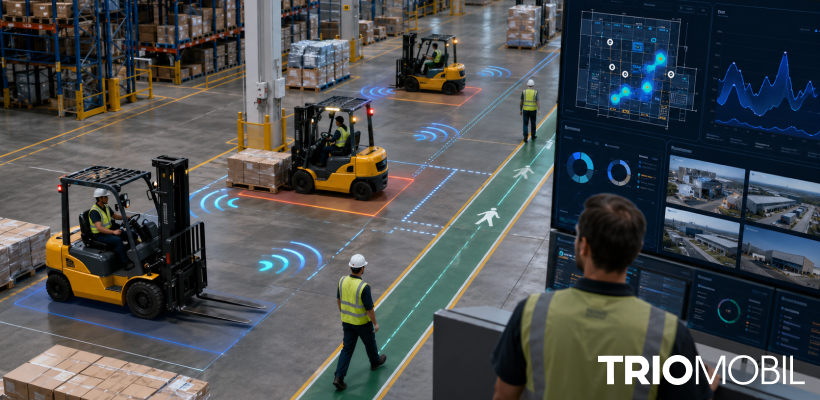
Forklift alert systems are evolving from simple warning devices into intelligent awareness platforms that help organizations better understand operational risk.
By combining AI, real-time positioning technologies, connected infrastructure, and operational analytics, organizations can provide more context-aware alerts that support safer forklift operations while improving visibility into workplace risk.
Learn how Trio Safe AI helps industrial organizations implement intelligent forklift alert systems that combine AI vision, RTLS, UWB, and connected safety technologies to support proactive workplace safety. Contact our team to schedule a consultation.
Disclaimer: Trio Mobil solutions are operator-assist technologies designed to support workplace safety. They do not replace operator training, safe work practices, or organizational safety procedures, and they cannot prevent every incident. System performance depends on deployment conditions, configuration, environmental factors, and compatible vehicle integration.
A forklift alert system provides visual, audible, or digital warnings to improve operator and pedestrian awareness.
Modern alert systems use AI, RTLS, UWB, and connected technologies to deliver context-aware notifications.
Intelligent alerts complement traditional warning lights and backup alarms rather than replacing them.
Alert systems can support workplace traffic management, operational visibility, and continuous safety improvement.
AI-powered platforms help organizations analyze recurring safety events across multiple facilities.
Selecting the right alert system requires evaluating operational risks, facility layout, and integration capabilities.
Frequently Asked Questions
AI-based systems use computer vision to analyze the forklift's surroundings and generate alerts when pedestrians, vehicles, or other configured hazards are detected. System capabilities depend on deployment configuration.
OSHA does not mandate a specific forklift alert system. However, OSHA requires employers to maintain safe powered industrial truck operations and manage workplace hazards through appropriate safety practices.
Some systems can. AI camera-based solutions and UWB or RTLS proximity technologies can help identify pedestrian presence and provide alerts depending on system design and configuration.
Yes. Some connected platforms can integrate with compatible vehicle controls to support configurable zone-based speed management alongside alert functionality.

Product Catalogue 2026
Download our catalog and gain access to a wealth of information on how to enhance industrial safety and efficiency. Our latest catalog features a diverse range of products and services that can help you achieve your goals.
Our Latest Blogs


Learn more about Trio Mobil's Solutions
Fill out the form and we'll contact you!