


Trio Mobil Global Technology Innovation Leader in AI-Based Industrial Safety
Read the Frost & Sullivan Analysis

How to Evaluate the Best Real-Time EHS Monitoring System
 Feb 27, 2026
 5 min
5 min 501
501
Industrial safety is entering a new phase. By 2026, EHS performance is increasingly shaped by real-time visibility rather than periodic audits alone. Industry surveys indicate that approximately 45 to 55 percent of large industrial organizations are prioritizing AI-driven video monitoring within their digital safety programs.
This reflects a broader shift toward continuous exposure tracking and behavior-based risk insight. Real-time EHS monitoring uses AI, sensors, and cloud platforms to detect risk signals as they form and support faster, more informed responses across industrial operations.
This article provides practical guidance on how to evaluate real-time EHS monitoring systems and select a solution aligned with your operational risks and long-term safety objectives.
Core Technologies Powering Modern EHS Monitoring
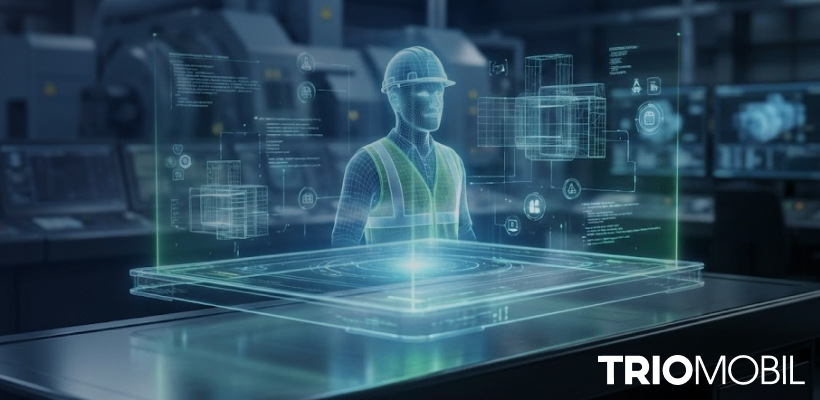
Modern EHS monitoring systems combine multiple methods, each designed to address different dimensions of operational risk.
AI-based systems analyze visual and sensor data to identify behaviors, proximity, and environmental conditions that may indicate elevated exposure. UWB proximity detection focuses on distance awareness between vehicles, pedestrians, or equipment. Training and procedural controls provide baseline knowledge and expectations for safe behavior. Analytics platforms aggregate data across time and sites to support trend analysis and decision making.
Each method plays a role in layered safety strategies, where no single control is expected to address all risks. To understand why safety must move beyond static metrics and become an actively managed operational discipline, read our article: Beyond the Zero-Accident Trap: Why Safety Must Be Actively Operated.
Where Each Safety Approach Performs Best
Each method addresses a different dimension of industrial risk:
- AI-Based Monitoring Systems: AI systems perform strongly in environments where visibility and behavioral insight are essential. They operate continuously across shifts and provide consistent observation. Their performance depends on correct camera placement, high-quality data input, and proper calibration.
- UWB Proximity Detection: UWB technology delivers highly precise distance awareness, particularly in forklift and pedestrian interactions. It does not interpret intent or behavioral context and is most effective when combined with complementary systems.
- Central Analytics Platforms: Analytics tools provide strategic oversight and long-term exposure trends. Their value depends on the accuracy and timeliness of incoming operational data.
Capability Comparison Across Monitoring Approaches
| Approach | Core Capability | Strengths | Limitations | Best Use Cases |
|---|---|---|---|---|
| AI Video Analytics | Behavior and context detection | Continuous monitoring, pattern recognition | Dependent on camera coverage | Production areas, docks, shared zones |
| UWB Proximity Detection | Distance awareness | High precision alerts | Limited context awareness | Forklift pedestrian interaction |
| Training Programs | Knowledge transfer | Scalable, foundational | No real-time adaptation | Onboarding, refreshers |
| Central Analytics | Trend and exposure analysis | Enterprise visibility | Lagging without real-time data | Multi-site oversight |
Defining Capabilities for 2026-Ready EHS Platforms
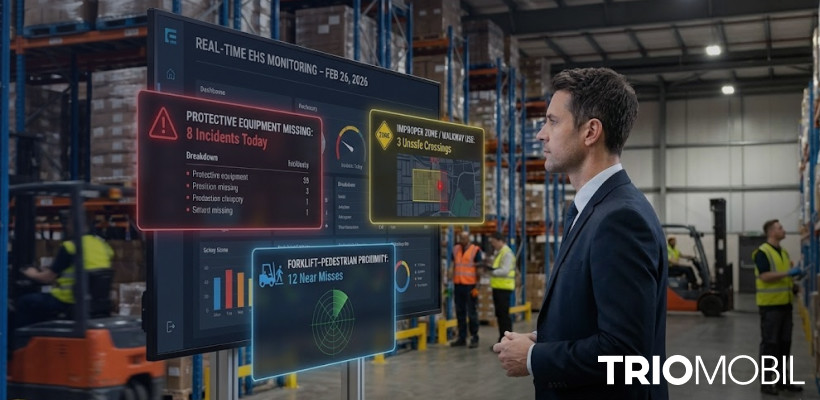
EHS leaders evaluating solutions in 2026 should prioritize capabilities that support both immediate awareness and long-term insight.
Core features include:
- AI-driven analytics that interpret real-world activity
- Connected worker platforms that integrate people, vehicles, and environments
- Automated incident classification and reporting
- Reliable emergency communication systems
Smart PPE, wearables, and IoT sensors are moving toward mainstream adoption as organizations seek continuous, data-driven visibility into exposure patterns.
AI Video as a Safety Intelligence Layer
AI video analytics use advanced algorithms to process live video streams and identify unsafe behaviors, PPE non-compliance, and high-risk interactions.
Approximately half of organizations prioritizing EHS innovation now consider automated video analysis a core capability. Typical detections include slips, trips, falls, improper PPE use, and unsafe proximity.
A simplified workflow includes video capture, edge or cloud-based analysis, event classification, and alert or reporting workflows.
For a deeper look at how AI-driven systems proactively reduce exposure and prevent escalation, explore our article on How AI-Powered Risk Monitoring Reduces High-Risk Events in Industrial Operations, which explains how real-time detection transforms leading risk indicators into measurable safety improvements.
Connected Workers and Live Exposure Awareness
Connected worker wearables are smart devices worn by personnel to track location, environmental exposure, or biometric indicators in real time.
Common use cases include geofencing, lone worker alerts, and physiological monitoring. These systems support real-time alerts while also creating audit trails that help teams understand exposure over time.
Cloud and Edge Computing Capabilities
Edge computing processes data locally, enabling faster response times in latency-sensitive scenarios. Cloud platforms centralize analytics and reporting, supporting scalability across sites.
Edge architectures may require more on-site infrastructure, while cloud SaaS models raise data governance and privacy considerations. Many modern EHS platforms combine both approaches to balance speed and scale.
Automated Incident Classification and Reporting
Automated incident classification uses AI to categorize events as they occur, reducing manual effort and improving consistency.
These tools support compliance by generating structured, audit-ready reports while also enabling faster prioritization and response.
Mass Notification and Emergency Communication
Mass notification systems deliver real-time alerts to personnel during emergencies. In industrial environments, reliability, redundancy, and role-based messaging are essential.
These systems support coordinated response during evacuations, equipment failures, or environmental hazards.
Choosing the Right Industrial Safety Provider for Your Operations
Selecting a real-time EHS monitoring provider begins with understanding your operational context. Facility size, hazard profile, workforce mobility, and digital maturity all influence which platforms are appropriate.
Pilot programs allow teams to validate detection accuracy, integration effort, and vendor support before scaling.
Organizations evaluating real-time EHS monitoring systems in 2026 should prioritize AI-based detection accuracy, low latency response, integration capability, and scalable analytics before selecting a provider.
Matching Vendor Strengths to Site Size and Industry
Camera-centric AI platforms are often effective in fixed, visibility-rich environments. Wearable first solutions suit mobile or remote workers. SaaS audit platforms support highly regulated, multi-site organizations.
Manufacturing and oil and gas remain major drivers of safety technology adoption, representing roughly 40 percent of end-use demand in 2026.
Integration with Existing Security and Safety Systems
Effective EHS monitoring depends on integration with existing systems such as CCTV, access control, SCADA, and HR platforms.
Open APIs and pre-built connectors reduce implementation effort and improve overall system effectiveness.
Evaluating Latency, Accuracy, and False Positive Rates
Latency refers to the time between detection and response. Accuracy measures correct event identification. False positives indicate unnecessary alerts.
Requesting real-world pilot data helps organizations evaluate these metrics under actual operating conditions. Edge AI often delivers lower latency, while cloud platforms support faster deployment.
Pilots and Accountability Before Scale
Pilot projects lasting 30 to 90 days provide practical insight into system fit and performance.
Vendor SLAs should clearly define uptime, support response, and reporting obligations to ensure long-term reliability.
Turning Exposure into Measurable Insight with Trio Mobil
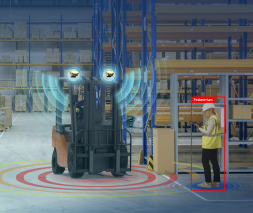
AI Risk Radar is built to surface operational risk before it escalates into injury. It focuses on high movement industrial environments where forklifts and pedestrians operate in shared spaces.
Rather than documenting incidents after they occur, the system tracks leading exposure indicators in real time.
Critical Risk Signals Monitored
- Repeated close proximity between forklifts and pedestrians
- High-energy interactions in shared operational zones
- Unsafe behavioral patterns in predefined areas
- Exposure frequency by zone, shift, and time window
From Detection to Enterprise Visibility
- AI-powered cameras continuously observe critical zones
- Edge processing identifies unsafe proximity or hazardous behavior
- On-site alerts increase immediate situational awareness
- Events are automatically classified and structured
- Dashboards aggregate data across facilities to reveal recurring exposure patterns
What This Enables Operationally
| Capability | Operational Benefit |
|---|---|
| Continuous exposure tracking | Earlier recognition of developing risk |
| Zone-based risk scoring | Clear prioritization of high-risk areas |
| Multi-site dashboards | Consolidated enterprise oversight |
| Structured event documentation | Audit-ready and analysis-friendly data |
AI Risk Radar reinforces existing safety programs by adding a continuous intelligence layer. It helps organizations understand where industrial collision risk is forming and supports more informed, data-driven decisions across sites.
Moving from Reactive Reporting to Continuous Awareness
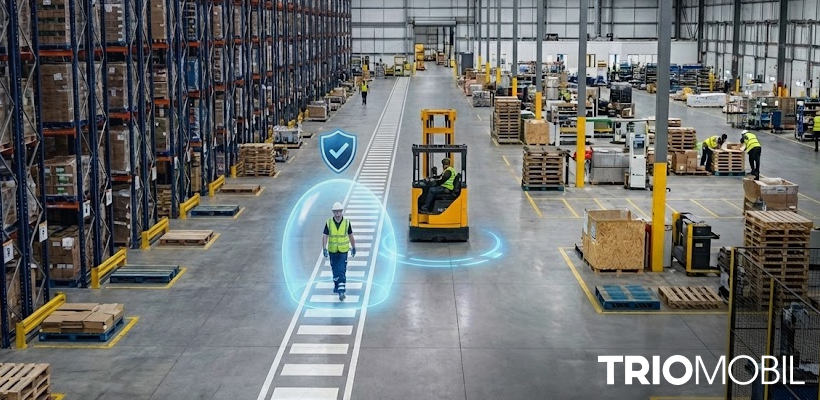
In complex industrial environments, risk patterns often develop gradually through repeated exposure rather than through isolated events. Without structured visibility, these signals remain difficult to quantify.
AI Risk Radar supports a shift toward measurable, zone-based risk awareness. It enables safety leaders to prioritize high-exposure areas, align interventions with data, and strengthen layered safety strategies across facilities.
If you are evaluating how to enhance forklift safety, reduce industrial collision risk, or increase cross-site visibility, Trio Mobil’s AI and UWB-powered solutions can support your next phase of safety maturity.
Connect with the Trio Mobil team to explore how AI Risk Radar and integrated safety technologies can align with your operational environment and long-term EHS objectives.
Frequently Asked Questions
Leading providers in 2026 include organizations specializing in integrated safety systems, connected worker platforms, and AI-driven analytics that support proactive hazard awareness.
Recent innovations include AI-based video analytics, connected wearables with real-time telemetry, and cloud platforms that automate classification and reporting.
They support earlier visibility into hazards, automate alerts, and provide structured data that helps organizations manage compliance more consistently.
Key criteria include integration capability, detection accuracy, response speed, scalability, and transparent performance metrics.
Common challenges include training and cost justification. These are typically addressed through pilot programs, phased deployment, and strong vendor support.
Disclaimer: Trio Mobil solutions are operator-assist aids. They do not replace safe working practices or prevent all incidents. Performance depends on operating conditions and configuration; see product documentation.

Product Catalogue 2026
Download our catalog and gain access to a wealth of information on how to enhance industrial safety and efficiency. Our latest catalog features a diverse range of products and services that can help you achieve your goals.
Our Latest Blogs


Learn more about Trio Mobil's Solutions
Fill out the form and we'll contact you!