


Trio Mobil Global Technology Innovation Leader in AI-Based Industrial Safety
Read the Frost & Sullivan Analysis

How Do Pedestrian Detection Forklift Cameras Work?
 Feb 20, 2026
 4 min
4 min 455
455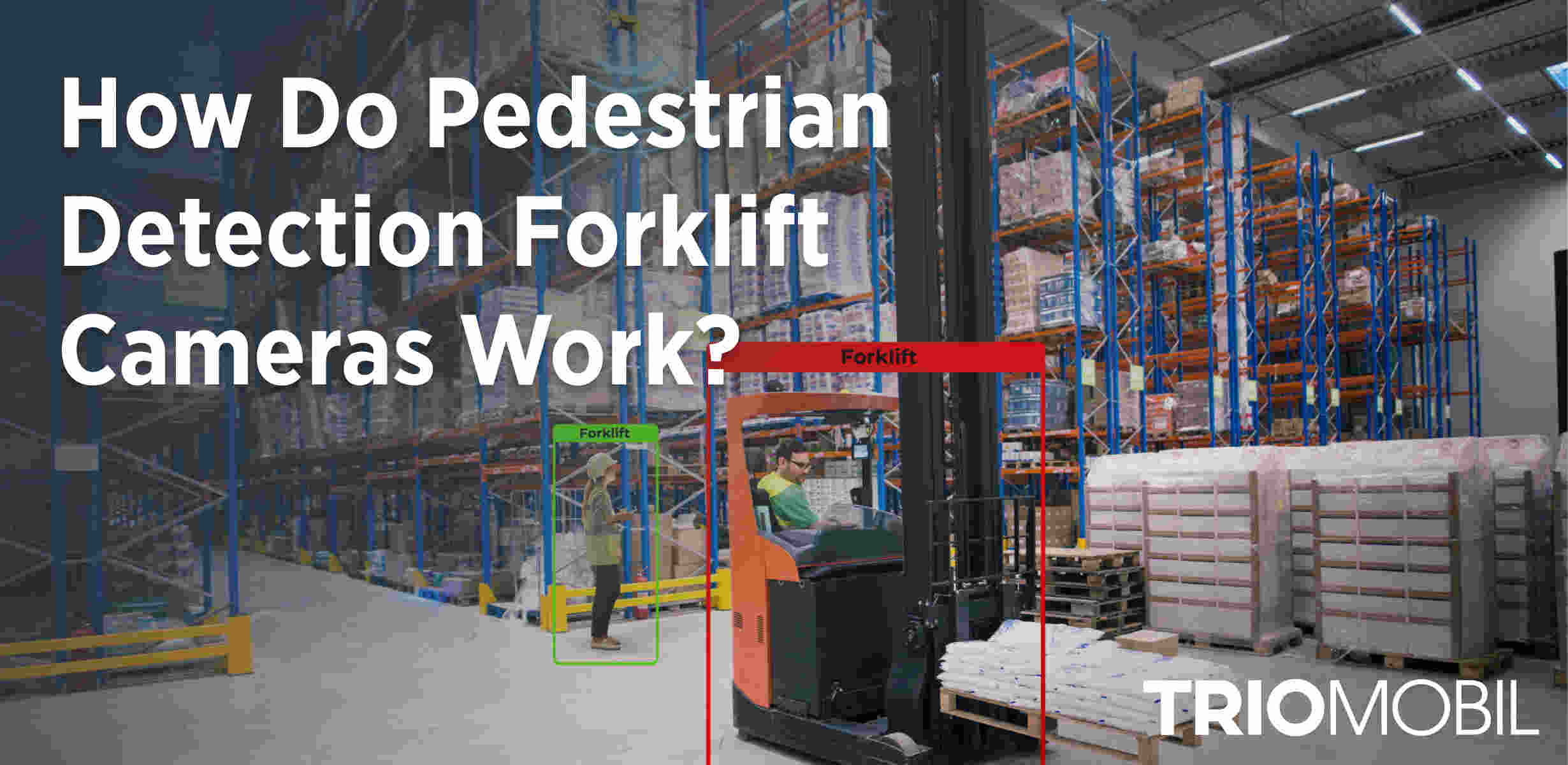
Forklifts are essential to many industrial operations, such as manufacturing, warehousing, and logistics, where they facilitate the efficient movement and storage of goods. However, forklifts can pose significant safety risks, particularly to pedestrians sharing the workspace. According to the Occupational Safety and Health Administration (OSHA), forklifts are involved in approximately 85 fatal accidents each year in the United States, and many of these involve pedestrians.
Implementing a forklift pedestrian detection system is crucial to mitigating these risks and enhancing workplace safety. This article focuses on how pedestrian detection cameras work, discusses the benefits of integrating these systems, and highlights the role of artificial intelligence in improving safety measures.
We also examine Trio Mobil’s solutions, showcasing how our technology aligns with these safety goals.
Statistical Data on Pedestrian Detection Systems
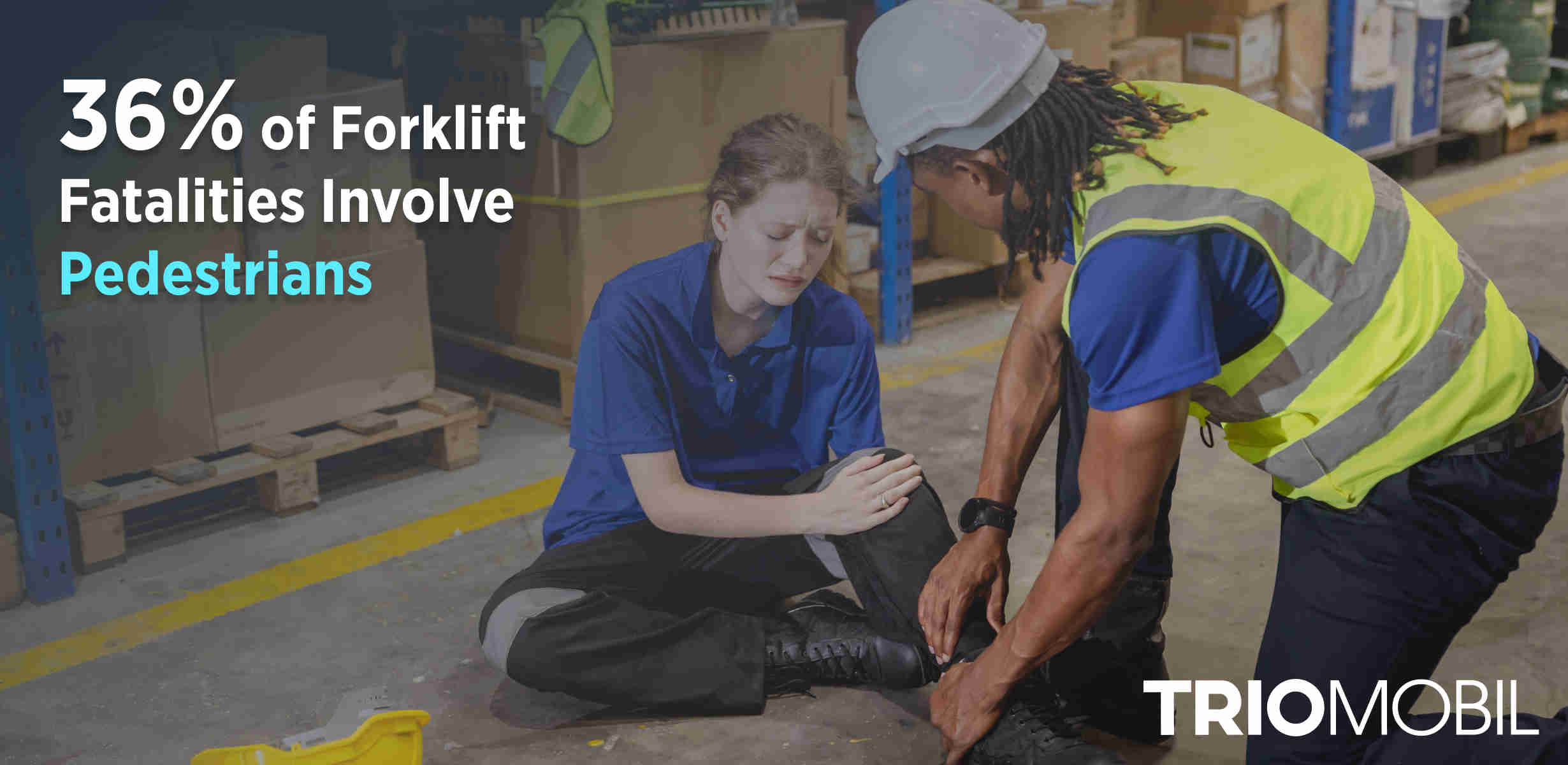
Pedestrian detection systems are critical in reducing workplace accidents involving forklifts. According to the National Safety Council (NSC), about 36% of forklift-related fatalities involve pedestrians. Additionally, data from the Bureau of Labor Statistics (BLS) shows that over 7,900 non-fatal injuries involving forklifts were reported in 2018, underscoring the need for effective safety solutions.
Key Statistics
- Fatal Accidents: Approximately 85 fatalities annually in the U.S. involve forklifts(OSHA)
- Injuries: More than 7,900 forklift-related injuries occur each year
- Pedestrian Involvement: 36% of forklift fatalities involve pedestrians
These statistics highlight the urgent need for warehouse pedestrian detection systems to protect both workers and pedestrians. Research indicates that implementing pedestrian detection technologies can significantly reduce accident rates, enhancing overall safety.
Trio Mobil's AI-based cameras utilize real-time data and advanced imaging technology to alert operators of potential hazards. These systems provide continuous monitoring of the forklift’s surroundings, detecting pedestrians and other vehicles to reduce the likelihood of accidents and improve workplace safety. By leveraging cutting-edge camera technology and intelligent software, the system provides operators with timely alerts, enhancing their awareness and ability to take preventive action, thereby creating a safer work environment for everyone involved.
Overview of Pedestrian Detection Cameras
Pedestrian-detection forklift cameras are sophisticated safety systems that help improve workplace safety by identifying and tracking people in the vicinity of moving forklifts. They utilize various technologies to provide the safety of both operators and pedestrians.
Key Components of Pedestrian Detection Cameras
| Component | Function |
|---|---|
| Cameras | Capture real-time video of the forklift's surroundings. |
| Sensors | Detect movement and measure distances between the forklift and objects. |
| Algorithms | Use machine learning to identify human shapes and movements. |
| Alerts | Provide visual and auditory signals to the operator about potential hazards. |
How Do Pedestrian Detection Cameras Work?
- Camera Installation:
- Cameras are strategically placed on the forklift to cover blind spots and provide a comprehensive view.
- Detection Process:
- Video Analysis: The system continuously analyzes video footage to identify human shapes using machine learning algorithms.
- Sensor Data Integration: Sensors measure the distance between the forklift and detected pedestrians.
- Real-Time Alerts: If a pedestrian is detected within a predefined danger zone, the system triggers alerts.
- Alert Mechanisms:
- Visual Alerts: Flashing lights on the dashboard to catch the operator's attention.
- Auditory Alerts: Beeping sounds or voice alerts to notify the operator of a potential hazard.
- Automatic Braking: Some systems can engage the brakes if a pedestrian is detected to be too close, helping prevent a collision.
Reasons to Implement Pedestrian Detection Cameras for Forklifts
Implementing pedestrian detection cameras offers several advantages, including:
- Enhanced Safety: These systems increase safety by providing real-time alerts about nearby pedestrians, helping prevent accidents.
- Cost Reduction: By reducing accidents, companies can lower medical costs, compensation claims, and potential legal liabilities.
- Regulatory Compliance: Meeting OSHA and other safety regulations avoids fines and enhances the company's reputation.
- Operational Efficiency: Minimizing accidents leads to fewer disruptions, improving workflow and productivity.
Benefits of Pedestrian Detection Cameras
Enhanced Safety for Workers and Pedestrians
- Immediate Alerts: Pedestrian detection cameras provide operators with instant alerts when pedestrians are detected in the forklift’s vicinity, allowing for prompt action to prevent accidents.
- Comprehensive Monitoring: Equipped with cameras and sensors, these systems offer a 360-degree view of the forklift's surroundings, continuously monitoring for pedestrian activity.
Reduction in Accident-Related Costs and Liabilities
- Financial Impact: Forklift accidents can result in significant financial burdens, including medical expenses, legal liabilities, and equipment damage.
- Cost Savings: Implementing pedestrian detection cameras reduces the incidence of accidents, leading to substantial savings in these areas.
Compliance with Safety Regulations and Standards
- Regulatory Adherence: Pedestrian detection systems assist organizations in complying with stringent OSHA regulations, minimizing the risk of fines and legal issues.
- Reputation Enhancement: Compliance with safety standards improves an organization’s reputation and builds trust among clients and stakeholders.
Improved Operational Efficiency
- Accident Prevention: Reducing accidents and near-misses minimizes disruptions, allowing for smoother workflows and increased productivity.
- Hazard Identification: These systems help identify potential hazards in real time, enabling operators to take corrective action before an incident occurs.
Trio Mobil’s pedestrian detection camera systems are engineered to enhance safety and efficiency across various industries. Our solutions prevent accidents, support compliance with safety regulations, and improve operational performance, offering a reliable safeguard for both workers and pedestrians.
How AI Enhances Pedestrian Detection Cameras
Artificial Intelligence plays a crucial role in enhancing pedestrian detection systems' capabilities. AI algorithms analyze data from cameras and sensors to provide accurate, timely alerts about potential hazards.
AI Capabilities in Pedestrian Detection Cameras
- Real-Time Object Detection: AI-driven systems can identify and classify objects in real time, distinguishing between pedestrians, other vehicles, and stationary obstacles.
- Accident Prevention: AI algorithms analyze patterns to anticipate potential accidents, enabling operators to take proactive measures to avoid them.
- Reduced False Positives: Advanced AI reduces false positives by accurately distinguishing between different types of objects, enhancing system reliability.
Benefits of AI in Pedestrian Detection Systems
- AI-Driven Object Detection and Recognition
- AI enhances the accuracy of pedestrian detection systems by improving the system's ability to recognize and classify different objects in the forklift’s environment.
- This technology provides operators with timely alerts, allowing them to react quickly to potential hazards.
- Role of AI in Real-Time Hazard Identification and Alert Systems
- AI technology processes vast amounts of data rapidly, allowing for immediate hazard identification and the generation of alerts.
- This reduces the reaction time needed by operators, preventing accidents before they occur.
- Benefits of AI
- AI reduces the occurrence of false positives, allowing operators to be alerted only to genuine hazards.
- This increases the overall reliability of pedestrian detection systems and enhances safety.
Trio Mobil’s Pedestrian Detection Camera Solutions
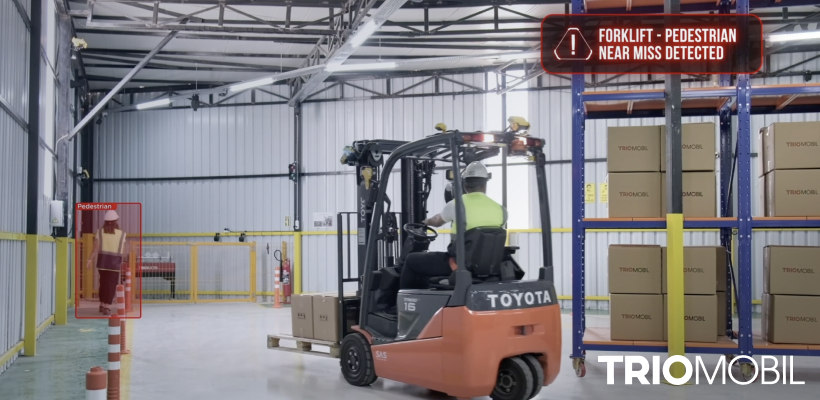
Trio Mobil offers cutting-edge solutions designed to enhance workplace safety and efficiency. Our pedestrian detection camera systems utilize advanced technologies to provide real-time hazard detection and alerts, creating a safer working environment.
Features and Benefits of Trio Mobil’s Pedestrian Detection Camera Solutions
- High-Resolution Cameras: Our systems use high-resolution cameras to capture clear images of the forklift’s surroundings, enabling accurate detection of pedestrians and obstacles. This clarity helps in identifying potential hazards swiftly and effectively.
- AI-Driven Pedestrian Recognition: Advanced AI algorithms enhance pedestrian recognition capabilities, reducing false positives and improving system accuracy. So that operators are alerted only to genuine threats, minimizing distractions.
- Seamless Integration: Trio Mobil’s camera systems are designed to integrate seamlessly with existing safety protocols, providing a comprehensive safety solution that complements other safety measures in place.
- Customizable Solutions: Our camera solutions can be tailored to meet the specific safety needs of different industries and operational environments. This customization optimizes each system for the unique challenges of its setting.
- Addressing Safety Challenges: Trio Mobil's pedestrian detection camera systems are specifically designed to address the unique safety challenges faced by various industries. Whether it's a busy warehouse or a bustling manufacturing plant, our systems are tailored to meet the specific needs of each environment, delivering optimal safety and performance.
For more detailed information about our innovative, modular, and plug-and-play solutions, visit our website or request a demo to see how our systems can transform your workplace safety and efficiency.
Disclaimer: Trio Mobil solutions are operator-assist aids. They do not replace safe working practices or prevent all incidents. Performance depends on operating conditions and configuration; see product documentation.

Product Catalogue 2026
Download our catalog and gain access to a wealth of information on how to enhance industrial safety and efficiency. Our latest catalog features a diverse range of products and services that can help you achieve your goals.
Our Latest Blogs


Learn more about Trio Mobil's Solutions
Fill out the form and we'll contact you!